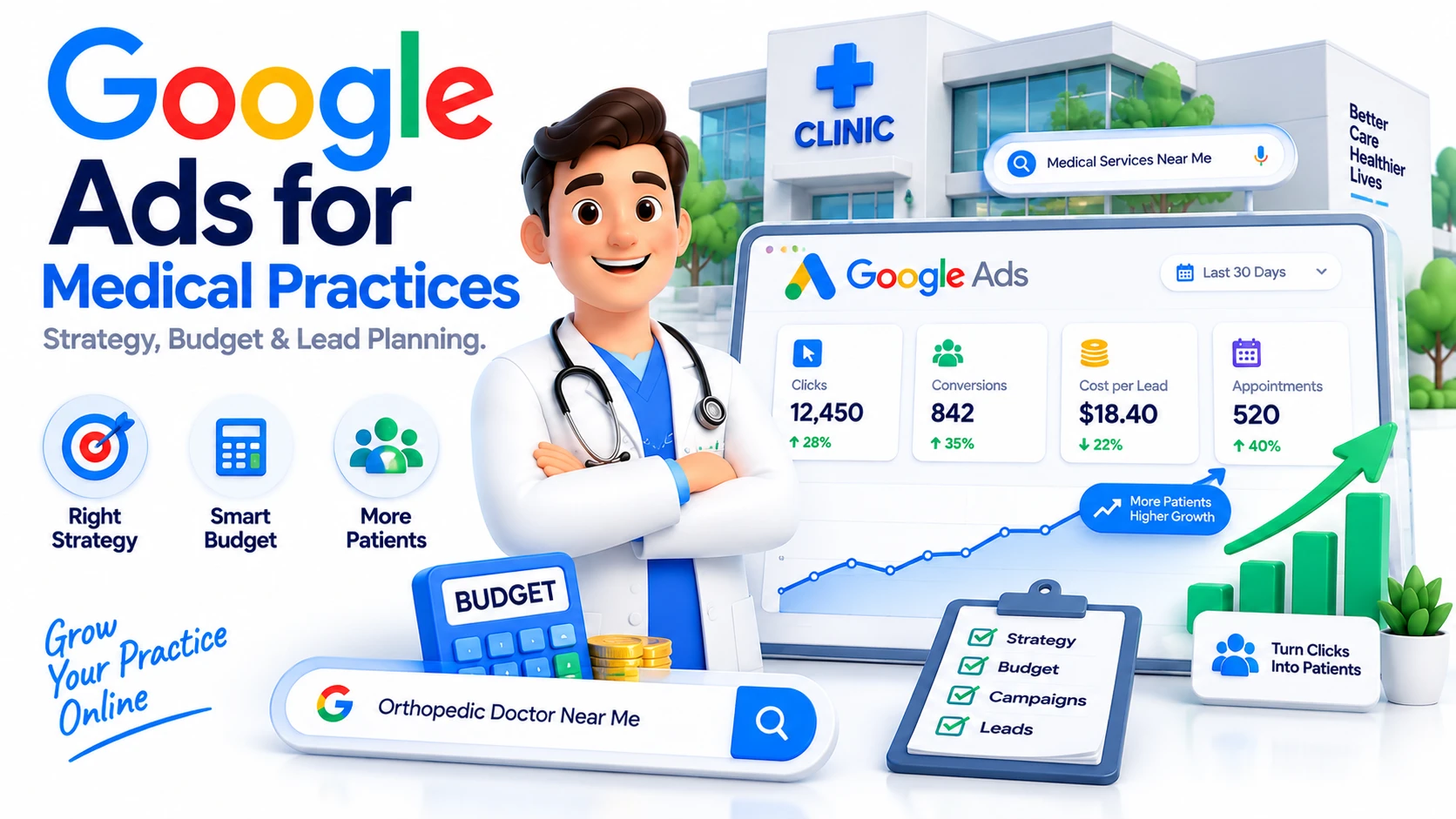
For a medical practice, showing up when someone is actively looking for a doctor or healthcare service can be valuable. But paying for clicks does not automatically produce appointments.
A successful campaign needs a clear objective, relevant search terms, well-structured ads, a useful landing page, accurate conversion tracking, and ongoing optimization.
This guide explains how medical practices can plan their paid search campaigns, decide where to spend, and focus on enquiries that have genuine business value.
How Google Ads Works for Medical Practices
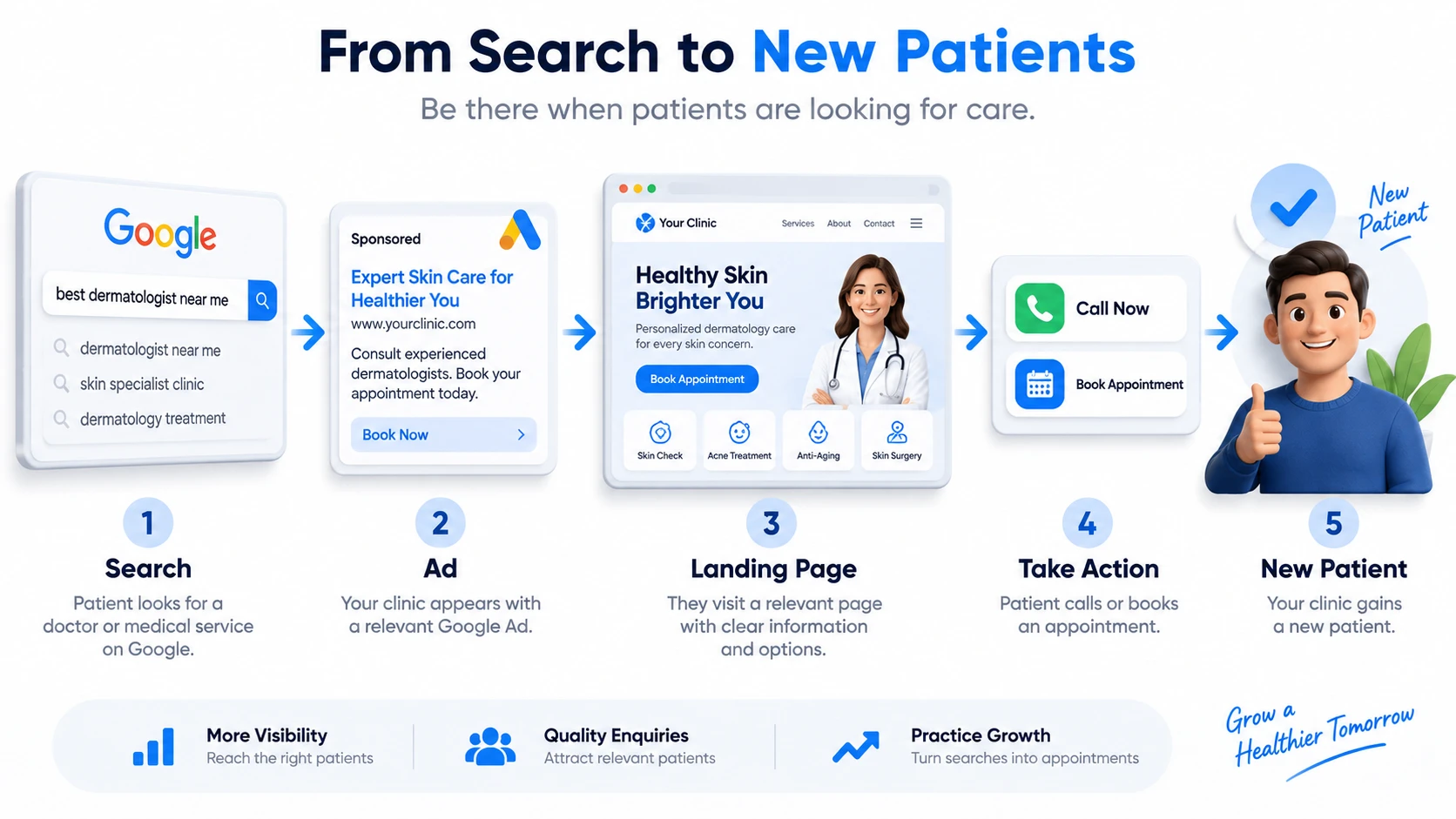
The basic journey looks like this:
Google Search → Ad → Relevant Page → Enquiry or Booking
A person searches for a service, sees a sponsored result, visits the website, and decides whether to call, complete a form, or book an appointment.
The key is matching the message to the person's reason for searching. Someone looking for a nearby specialist should not be sent to a page filled with unrelated services.
For a broader explanation of paid search, see our guide to Google Pay-Per-Click advertising.
Building a Google Ads Strategy for Doctors
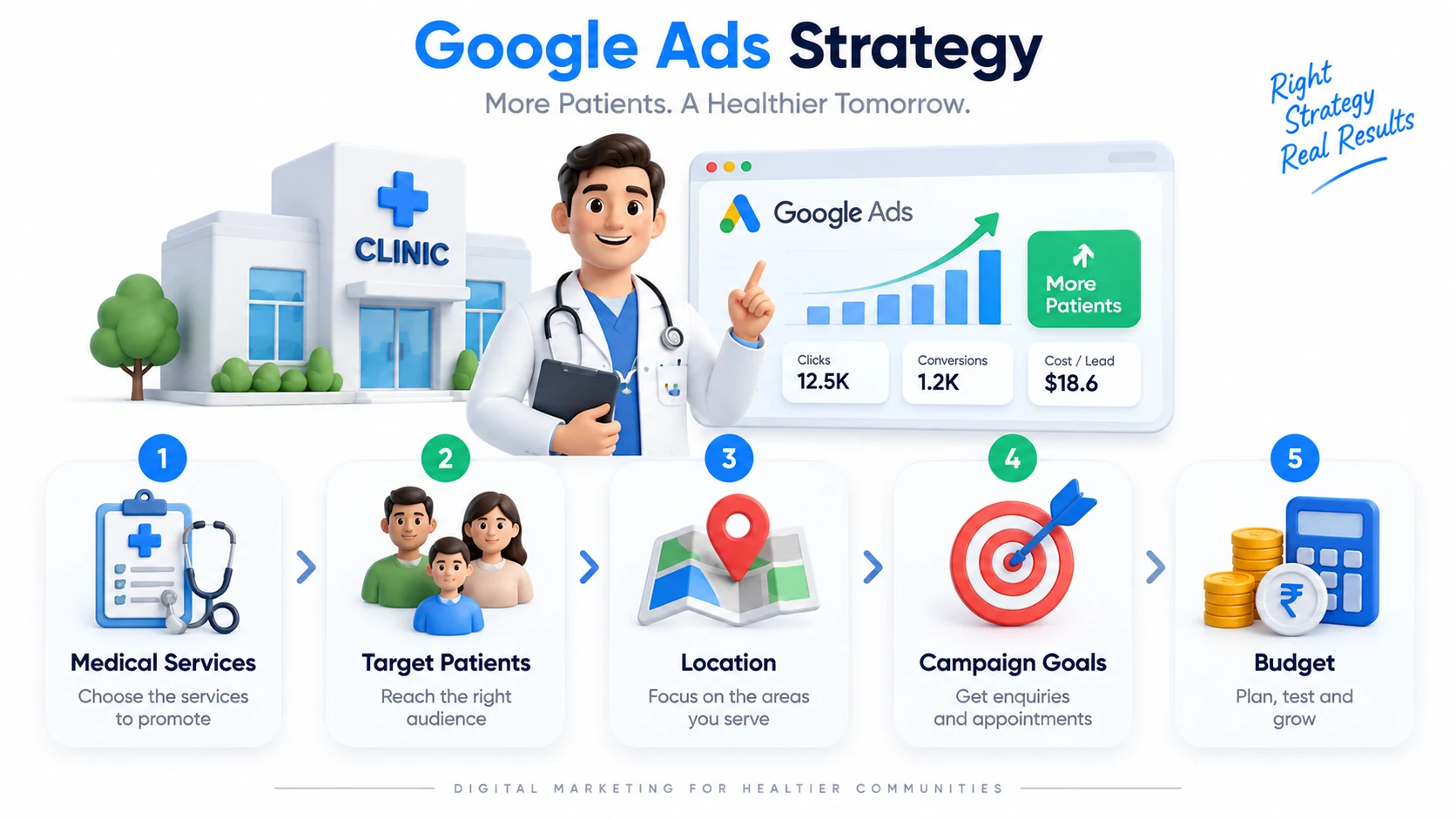
Before creating campaigns, decide what a successful month looks like.
For one practice, the priority may be new consultation bookings. Another may care more about phone enquiries for a particular specialty.
Start by identifying:
The services you want to promote
The locations you serve
The type of patient you want to reach
The action you want visitors to take
The budget available for testing and growth
It is usually better to begin with a focused set of services than spread the budget across everything the practice offers.
Choosing the Right Search Terms
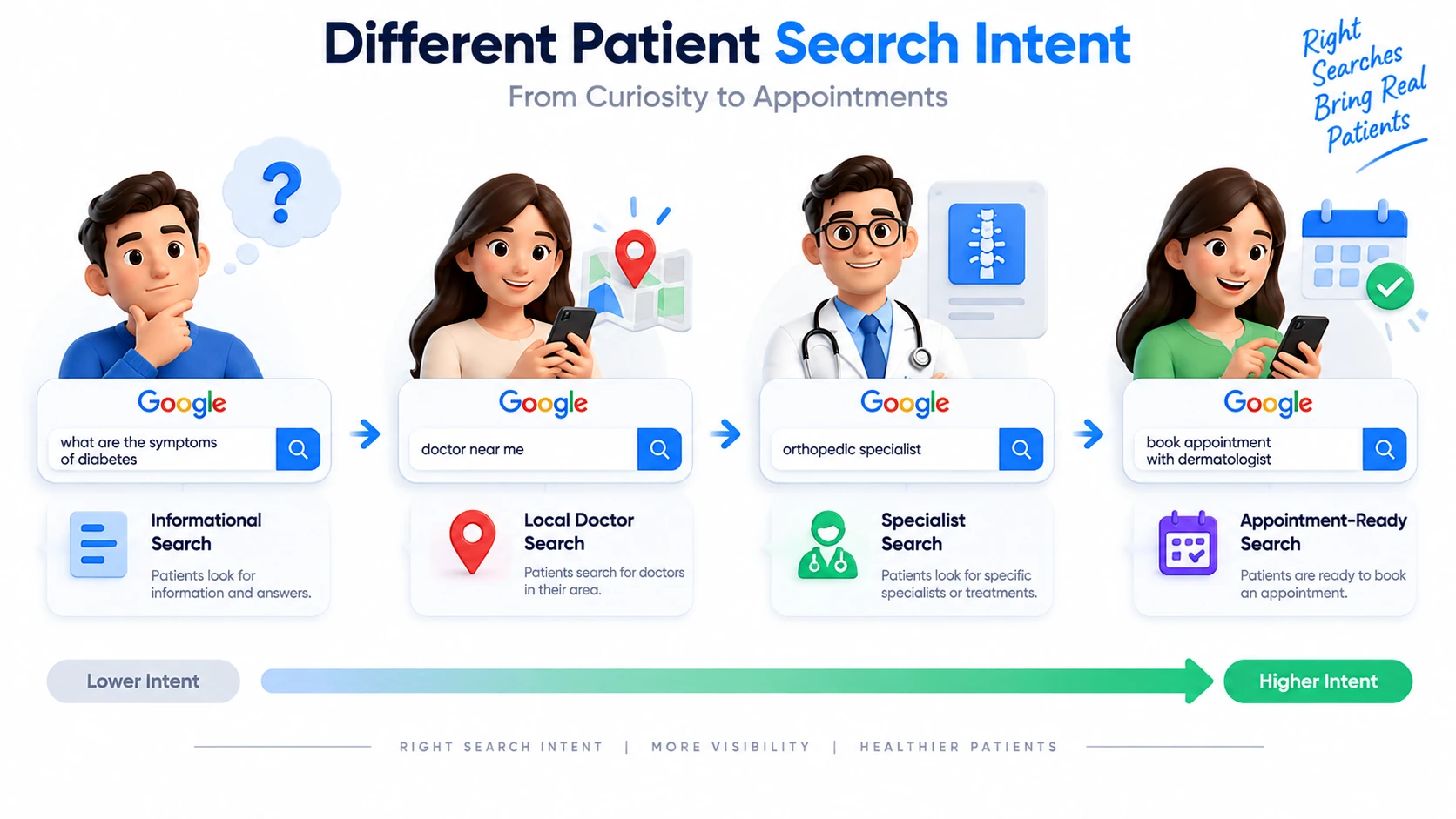
Good paid search starts with understanding what people actually type into Google.
Consider the difference between:
“what causes back pain”
and
“physiotherapist near me”
The first may indicate someone looking for information. The second is much closer to a local service decision.
Location can also make a major difference. Searches such as “dentist in [city]”, “cardiologist near me”, or “private clinic [location]” can provide stronger commercial signals than broad healthcare terms.
Campaigns should also be reviewed after launch. Search-term data can reveal irrelevant queries that should be excluded as negative keywords and useful searches that deserve closer attention.
Structuring Campaigns for a Medical Practice
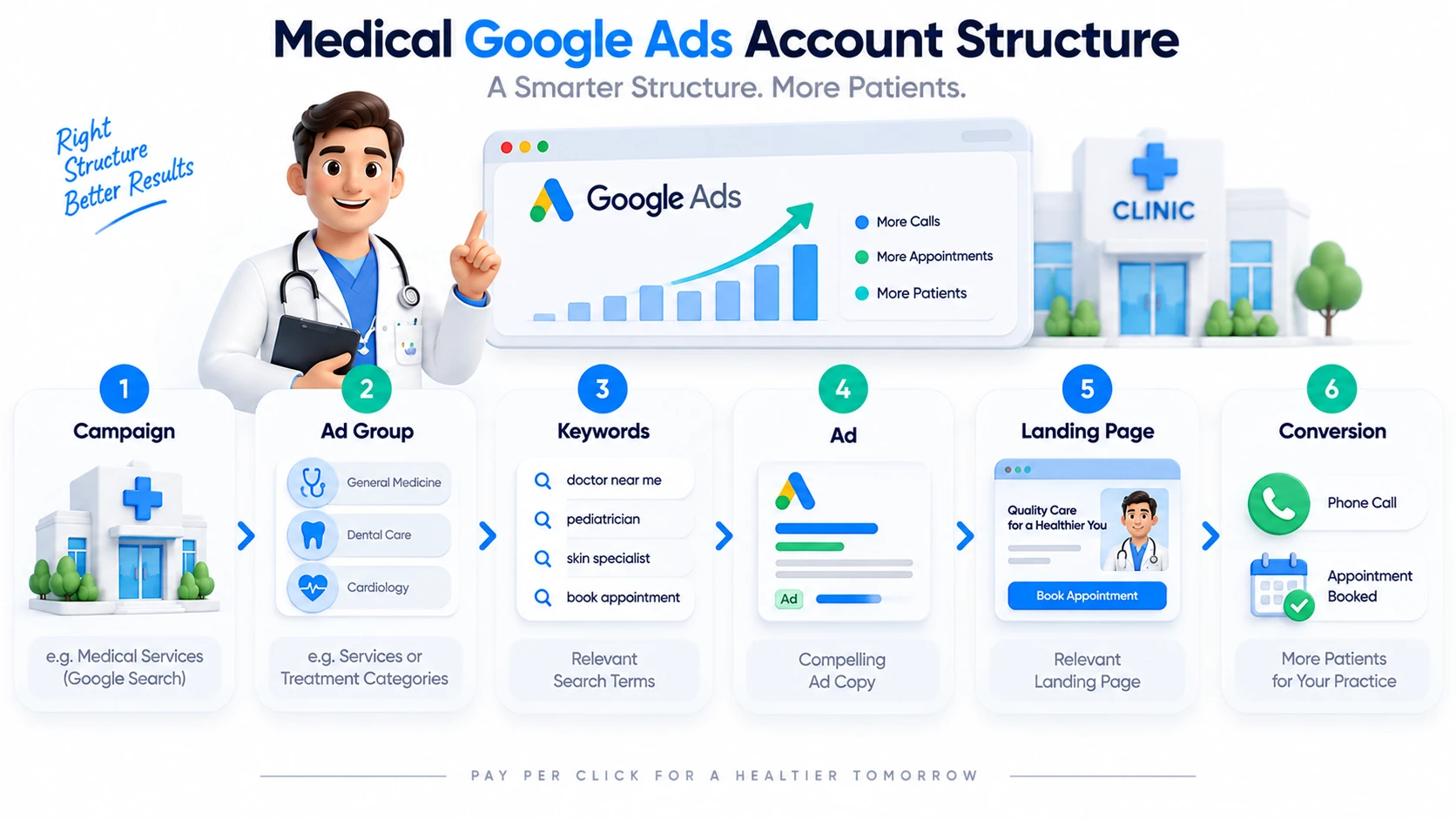
A simple structure helps keep the account manageable.
Campaign | Example Focus | Main Objective |
|---|---|---|
General services | Consultations | Enquiries |
Specialist services | Specific specialty | Appointments |
High-value services | Selected procedures | Qualified leads |
Local searches | Nearby patients | Calls or bookings |
Keep closely related services together and avoid mixing unrelated themes into the same ad group. This makes it easier to keep the search, advertisement, and landing page aligned.
Optimizing Google Ads for Doctors in 2026
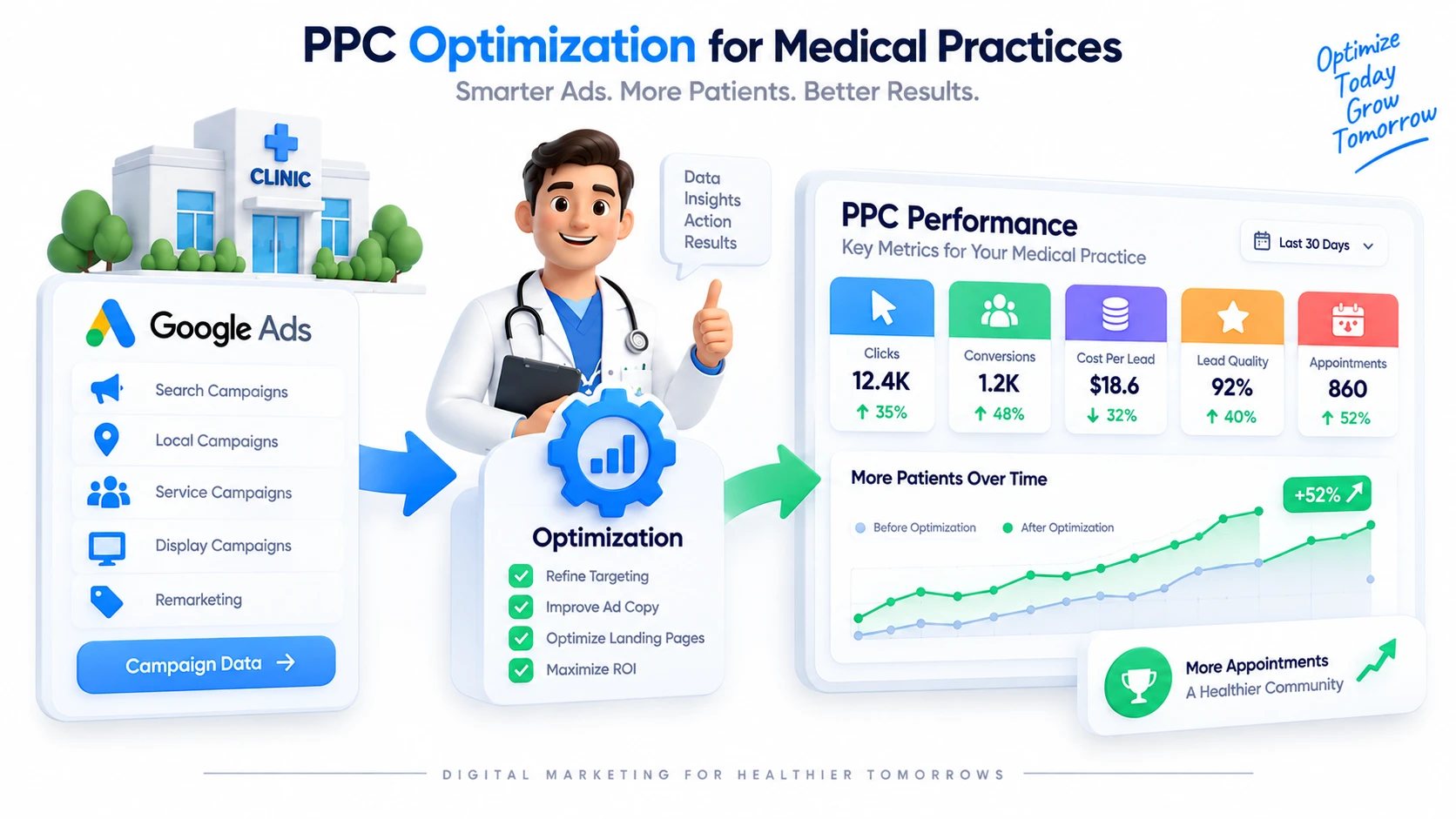
Launching a campaign is only the beginning.
Performance should be evaluated using business outcomes, not clicks alone. Look at conversion rate, cost per lead, search terms, lead quality, and appointment outcomes.
Conversion tracking is particularly important because it helps distinguish traffic from actions that matter to the practice.
A campaign generating many clicks but very few enquiries may need a different keyword mix, better ad messaging, or a more relevant landing page.
A campaign with fewer clicks can be much more valuable when those visitors are more likely to become patients.
How Much Should a Medical Practice Spend?
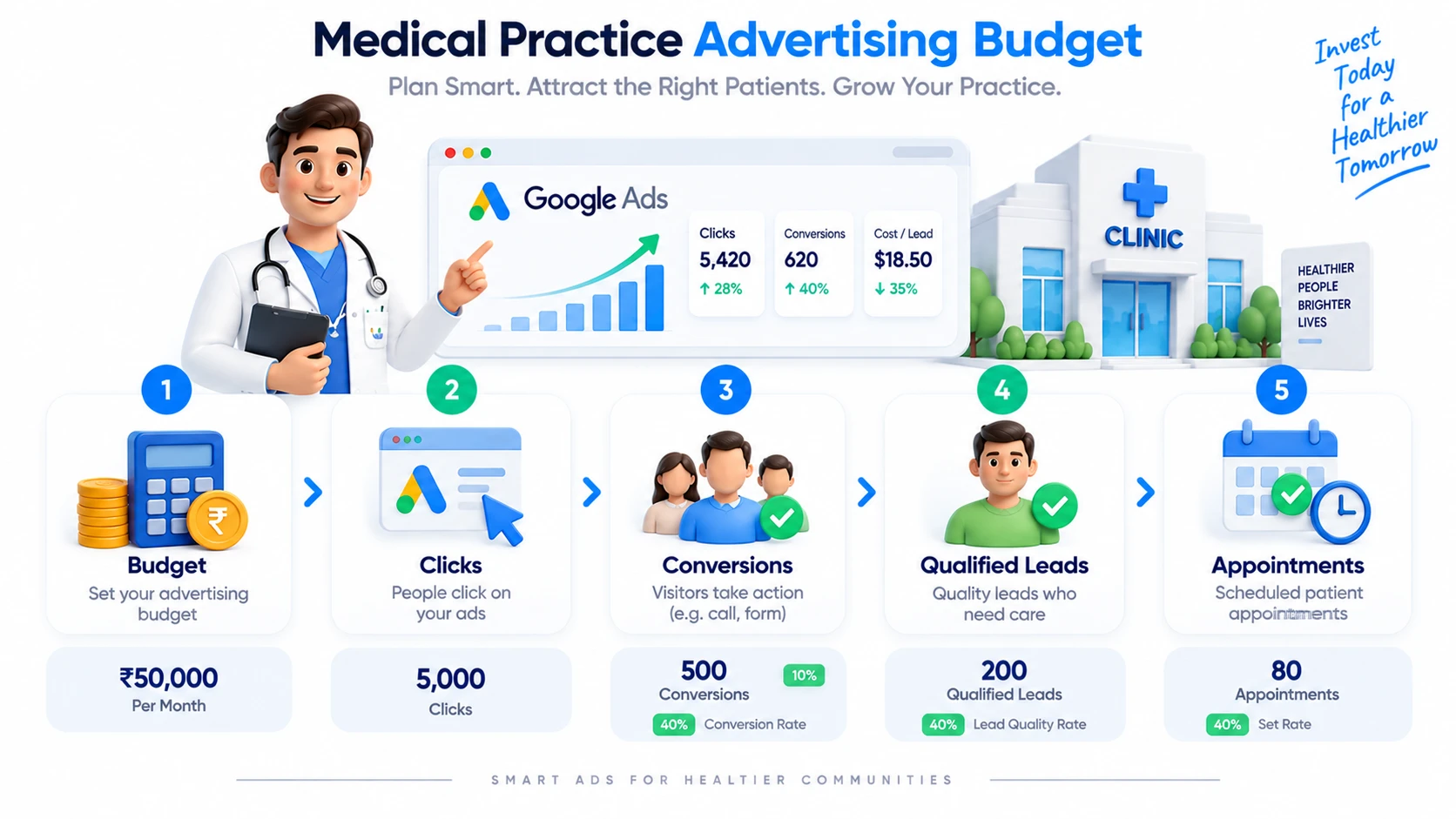
There is no universal budget for healthcare advertising.
Costs depend on factors such as:
Location
Competition
Service demand
Search volume
Average click cost
Conversion rate
Value of a new patient
A basic planning calculation is:
Estimated Leads = Monthly Ad Budget ÷ Estimated Cost Per Lead
For example, a $2,000 budget at an estimated $100 cost per lead would suggest roughly 20 leads. It is a planning model, not a promise of results.
A sensible process is:
Test → Measure → Improve → Scale
First find out which services and searches are producing worthwhile enquiries. Then put more budget behind the areas that demonstrate potential.
Turning Ad Clicks Into Patient Enquiries
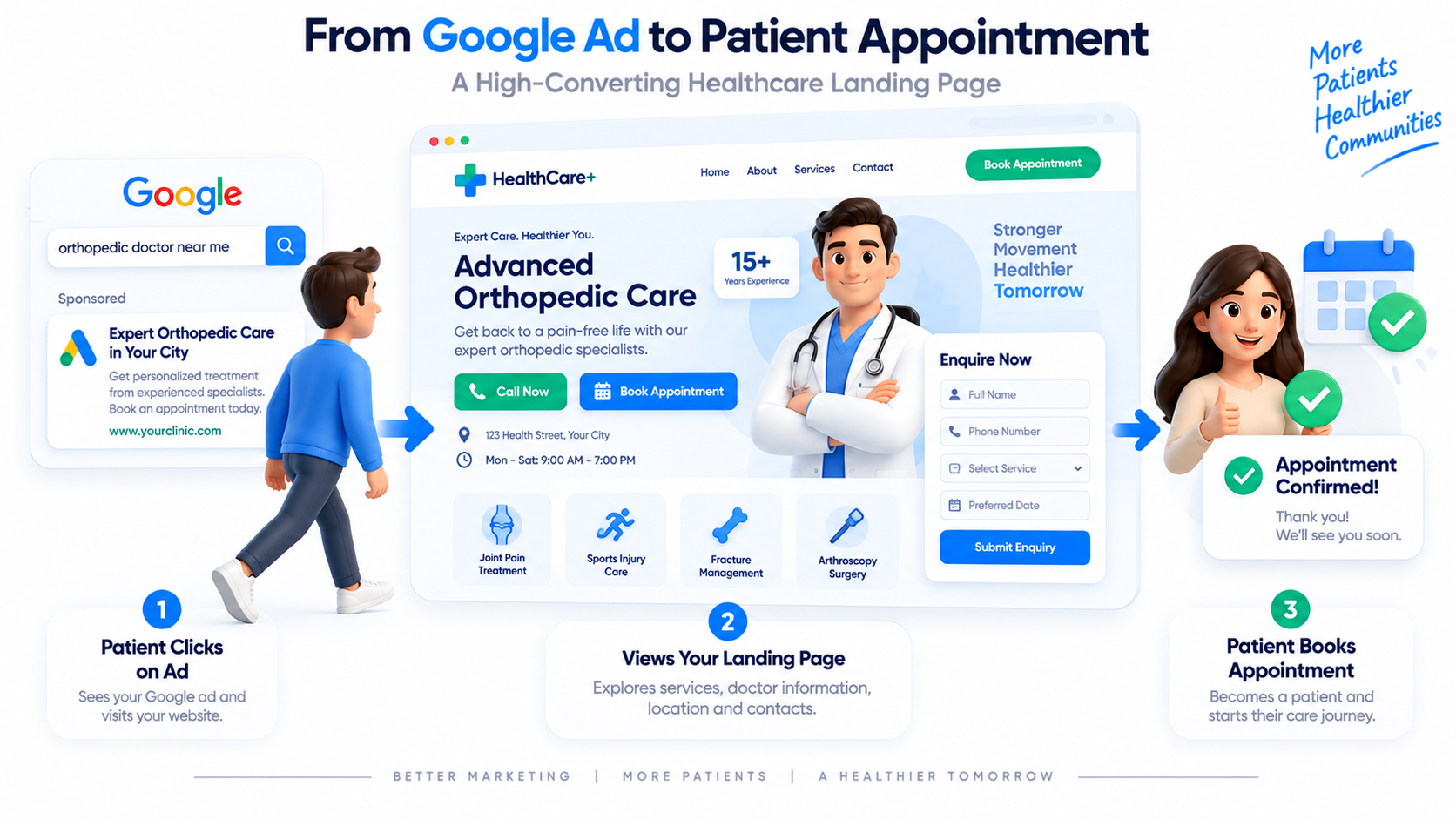
Even a well-targeted campaign can struggle when the website experience is poor.
A landing page should make the next step obvious. Visitors should quickly understand what the practice offers, where it is located, who provides the service, and how to make contact.
Use clear calls to action such as:
Book an Appointment
Call the Practice
Request a Consultation
Make the experience easy on mobile devices as well as desktop screens.
The landing page should also support the promise made in the ad. Sending a person searching for one specific service to a generic homepage can create unnecessary friction.
Common Mistakes Medical Practices Make
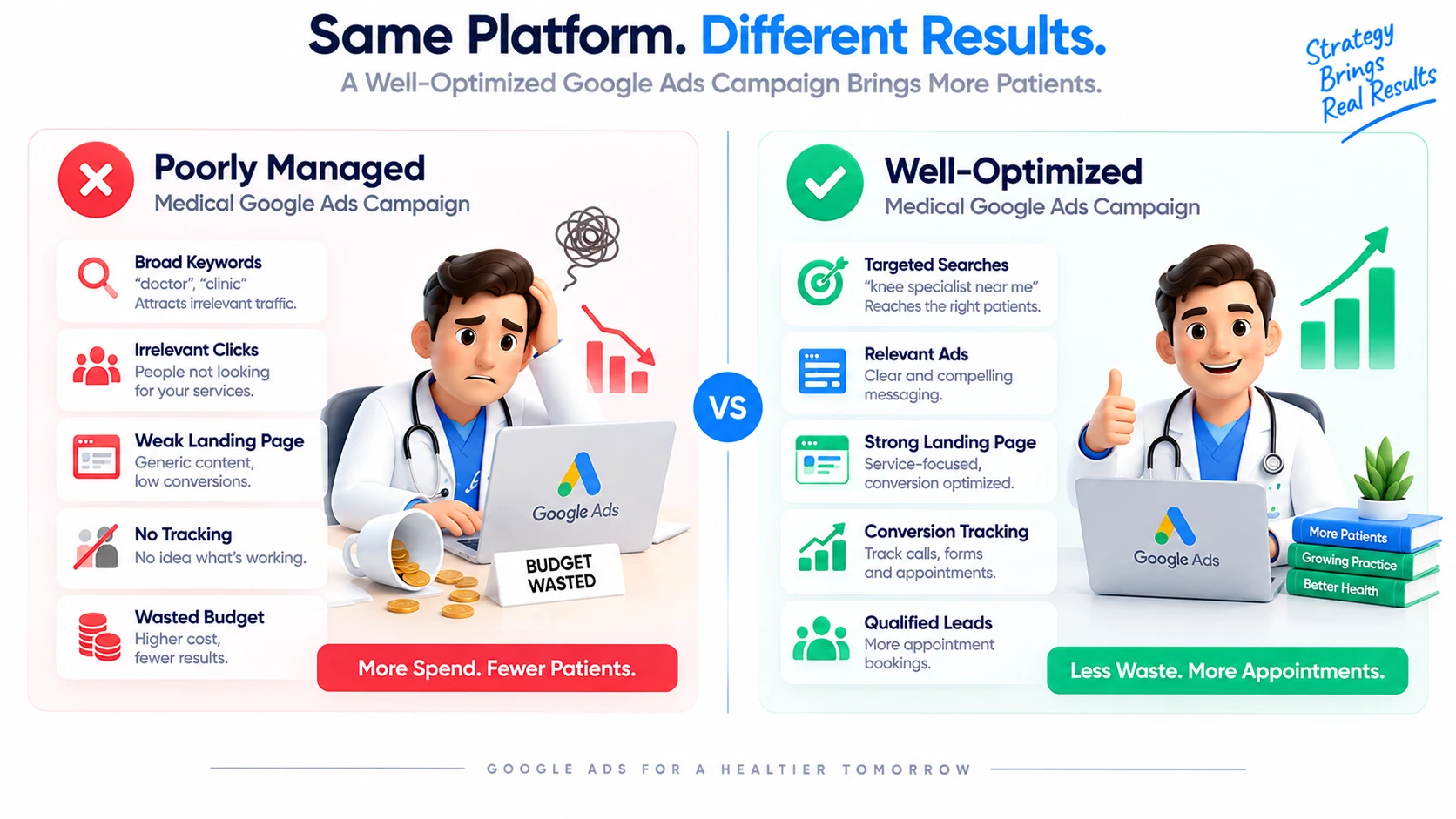
Many campaigns lose efficiency because of simple setup or management problems.
Common examples include targeting overly broad searches, ignoring negative keywords, using generic advertisements, sending traffic to unrelated pages, and failing to measure actual enquiries.
Another mistake is judging a campaign purely by the number of clicks.
For a medical practice, the more useful question is:
“Are these visitors becoming relevant enquiries and appointments?”
Healthcare Advertising Policies Matter
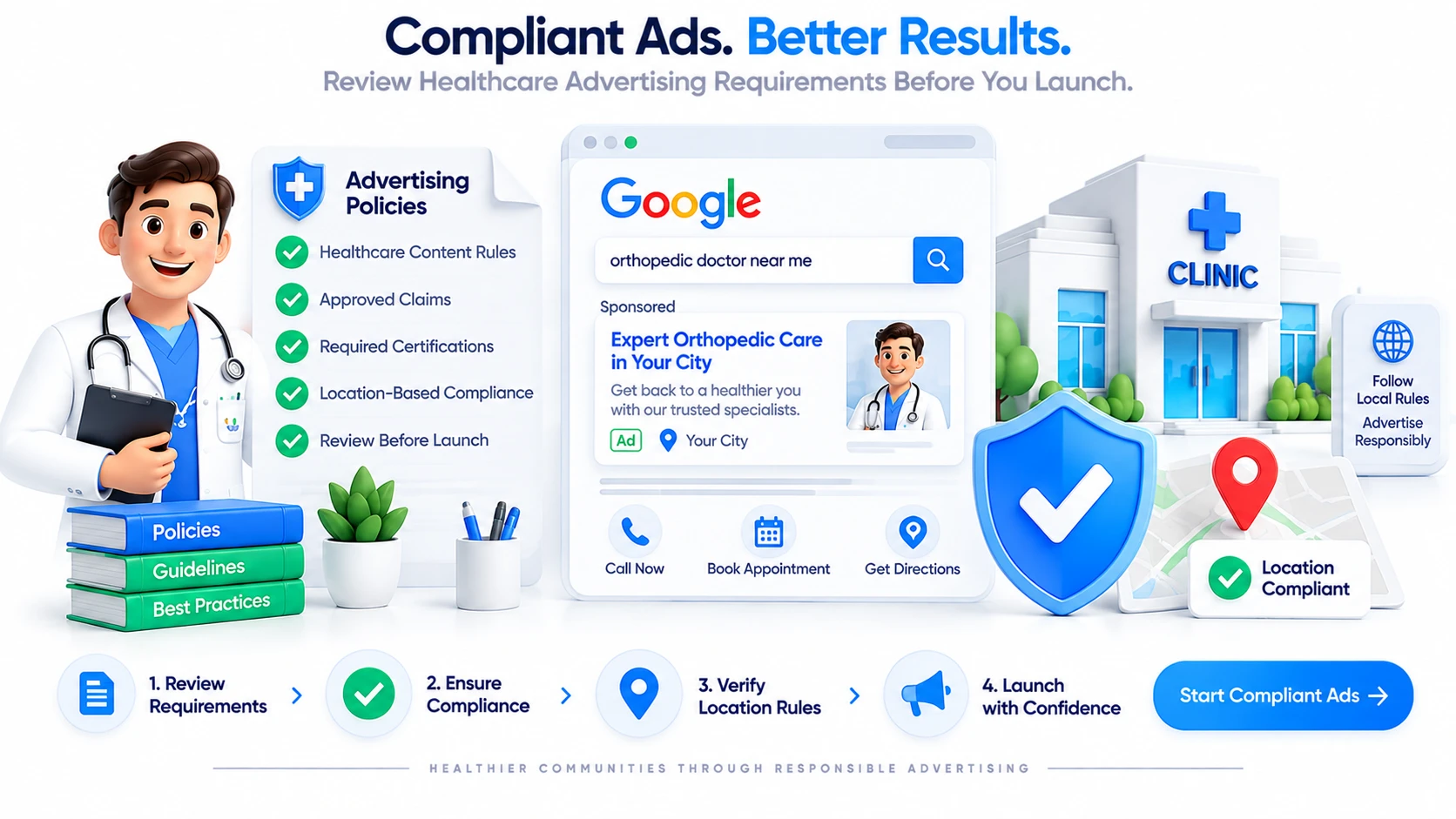
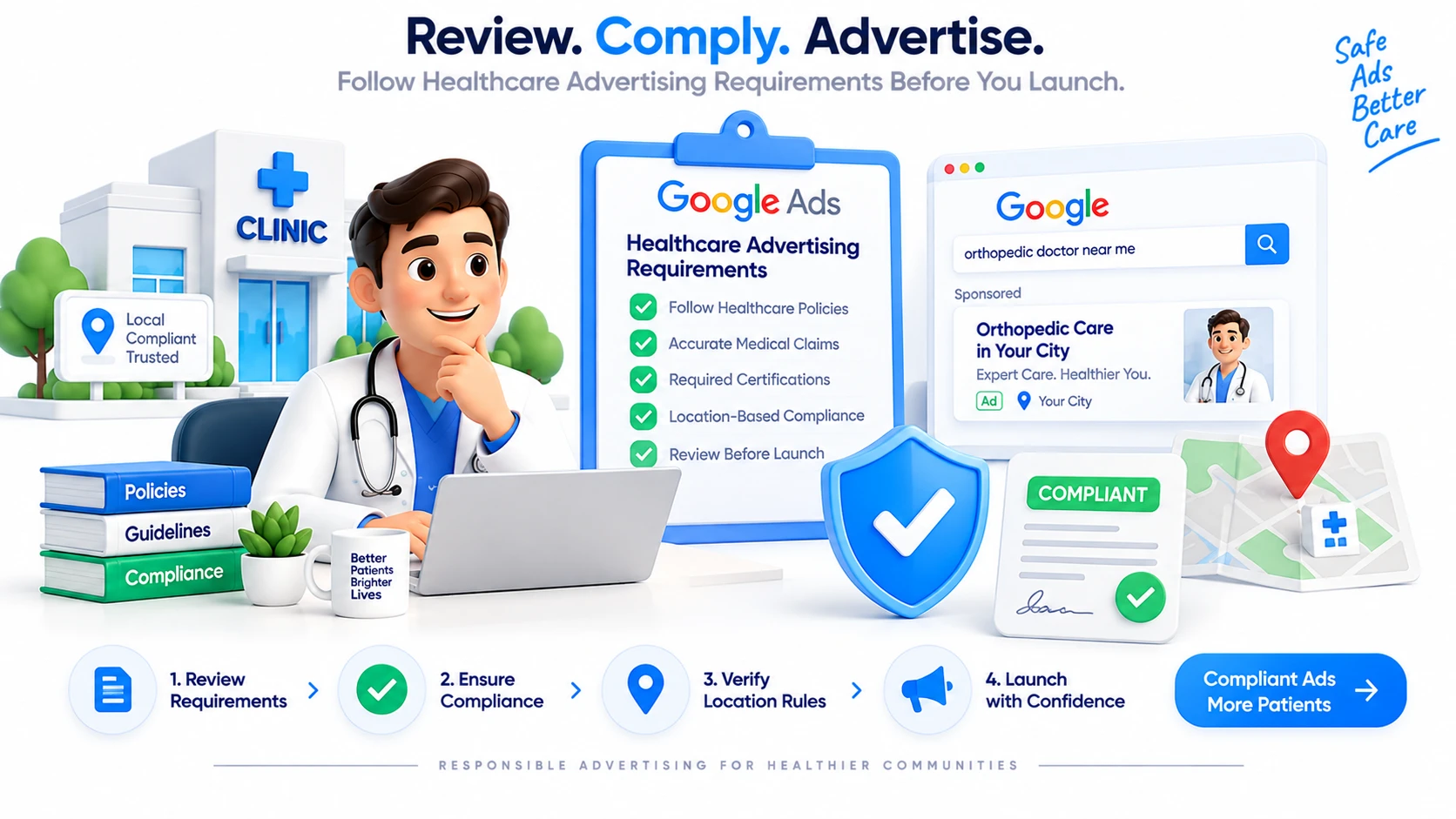 Healthcare advertising has additional restrictions. Google states that some healthcare-related products and services cannot be advertised, while others can only be promoted in certain locations or after meeting specific approval requirements. Advertisers must also follow applicable local laws and regulations.
Policies can also change by market. For example, Google's April 2026 update introduced specific country requirements concerning prescription-drug services in India.
Practices should therefore review the current policy requirements for their service and target location before launching a campaign.
When Google Ads Makes Sense for a Medical Practice
 Paid search can be useful when a practice:
Wants faster visibility for selected services
Serves an area with measurable search demand
Has capacity to handle new enquiries
Can track calls, forms, or bookings
Is prepared to optimize campaigns over time
Advertising works best when it is part of a larger acquisition system rather than treated as a simple source of website traffic.
A Practical Plan for Your Next Campaign
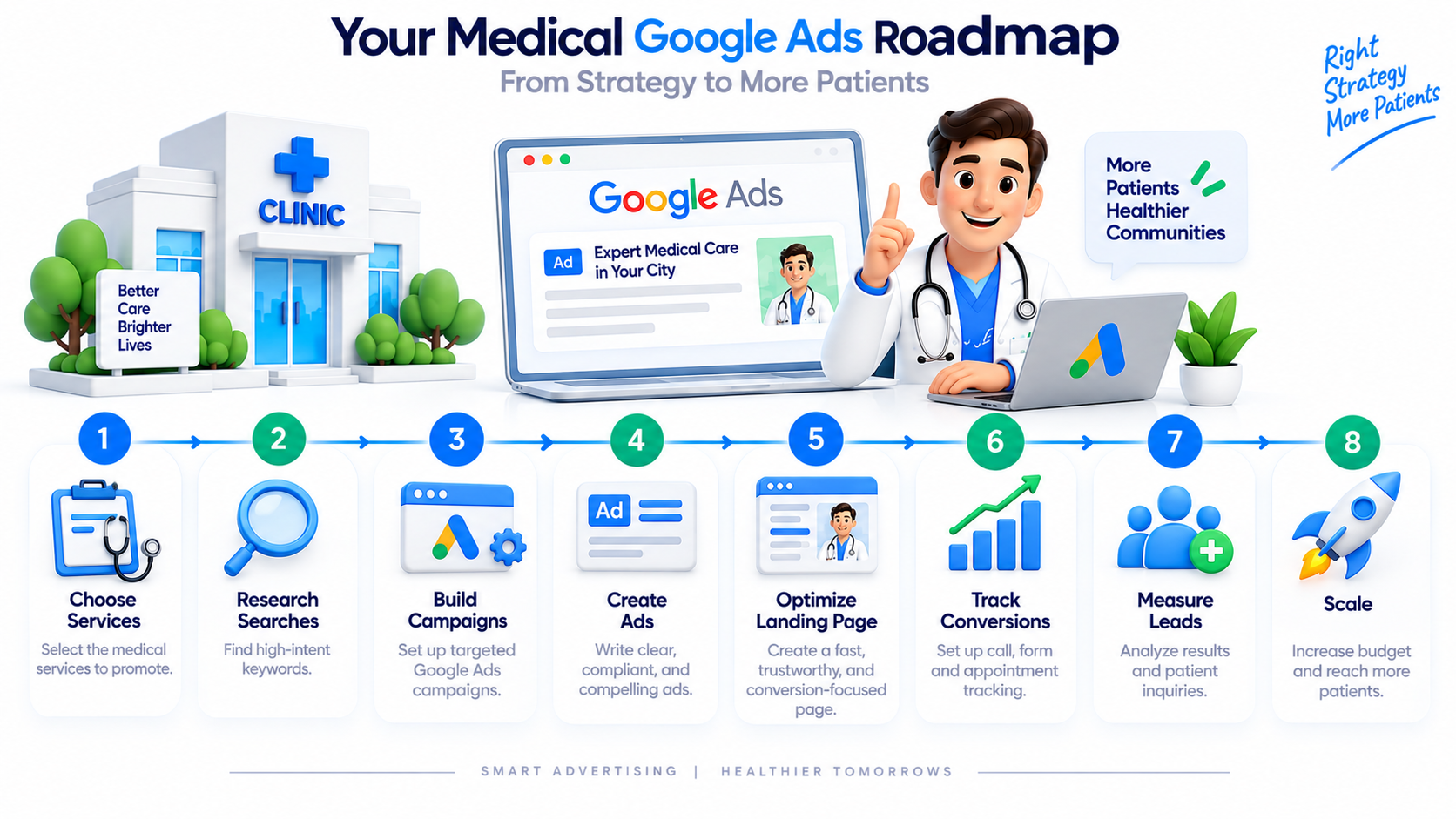
Start with a small group of important services. Research relevant searches, organize campaigns around clear themes, write specific advertisements, and send each campaign to an appropriate page.
Then measure what happens after the click.
Searches → Clicks → Enquiries → Appointments
That final journey is what should guide budget decisions.
Final Thoughts
Google Ads for medical practices is not simply about getting your clinic in front of more people. The goal is to reach relevant searchers, provide a useful experience, and turn suitable traffic into genuine enquiries.
A focused strategy, controlled budget, accurate tracking, and regular optimization can give a practice a much clearer view of where its advertising investment is working.
When campaign structure, targeting, ads, landing pages, and measurement are handled together, paid search becomes much easier to evaluate and improve.
For practices that need help planning and managing campaigns, online advertising services can provide a structured approach to targeting, optimization, and lead generation.