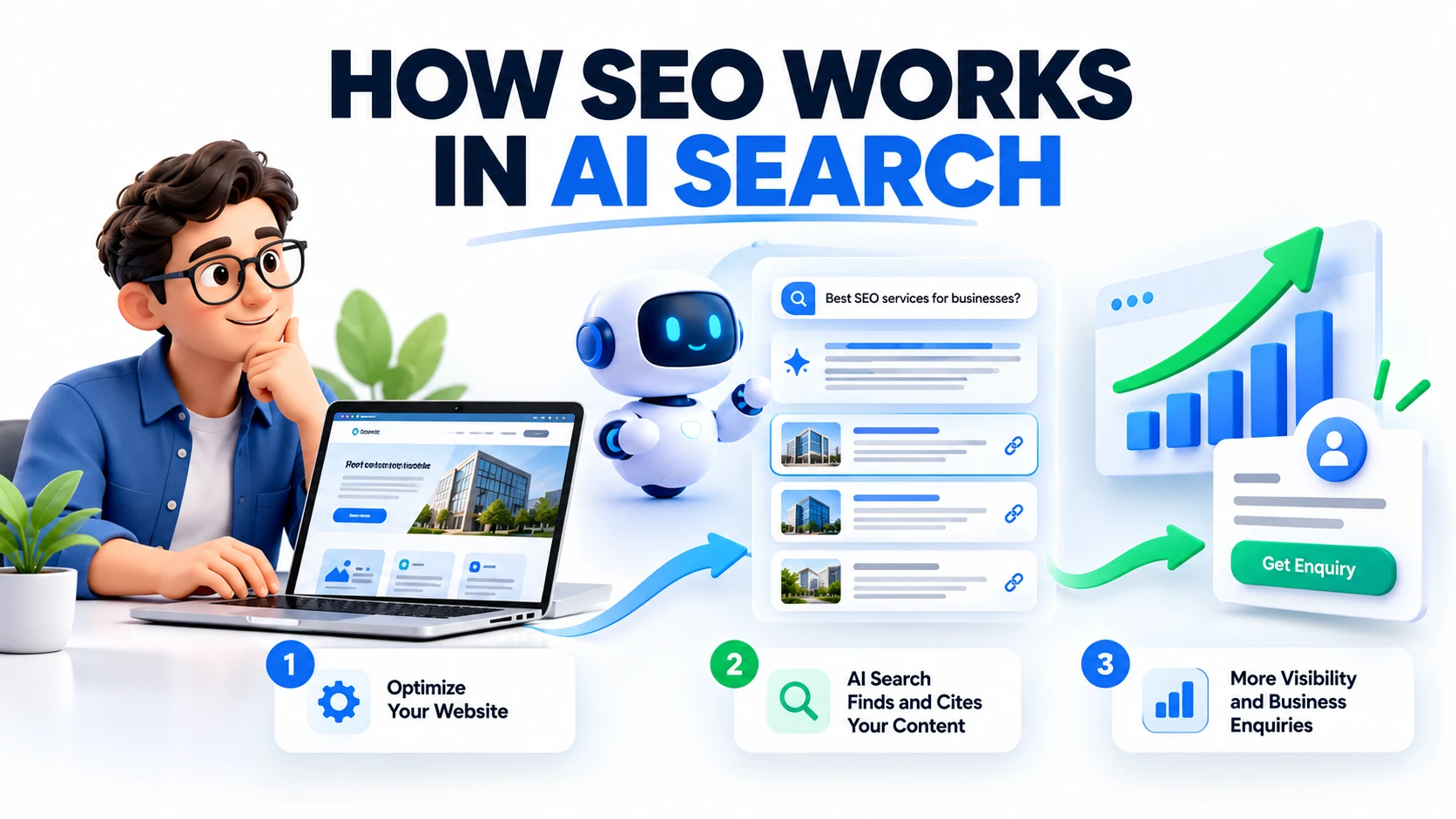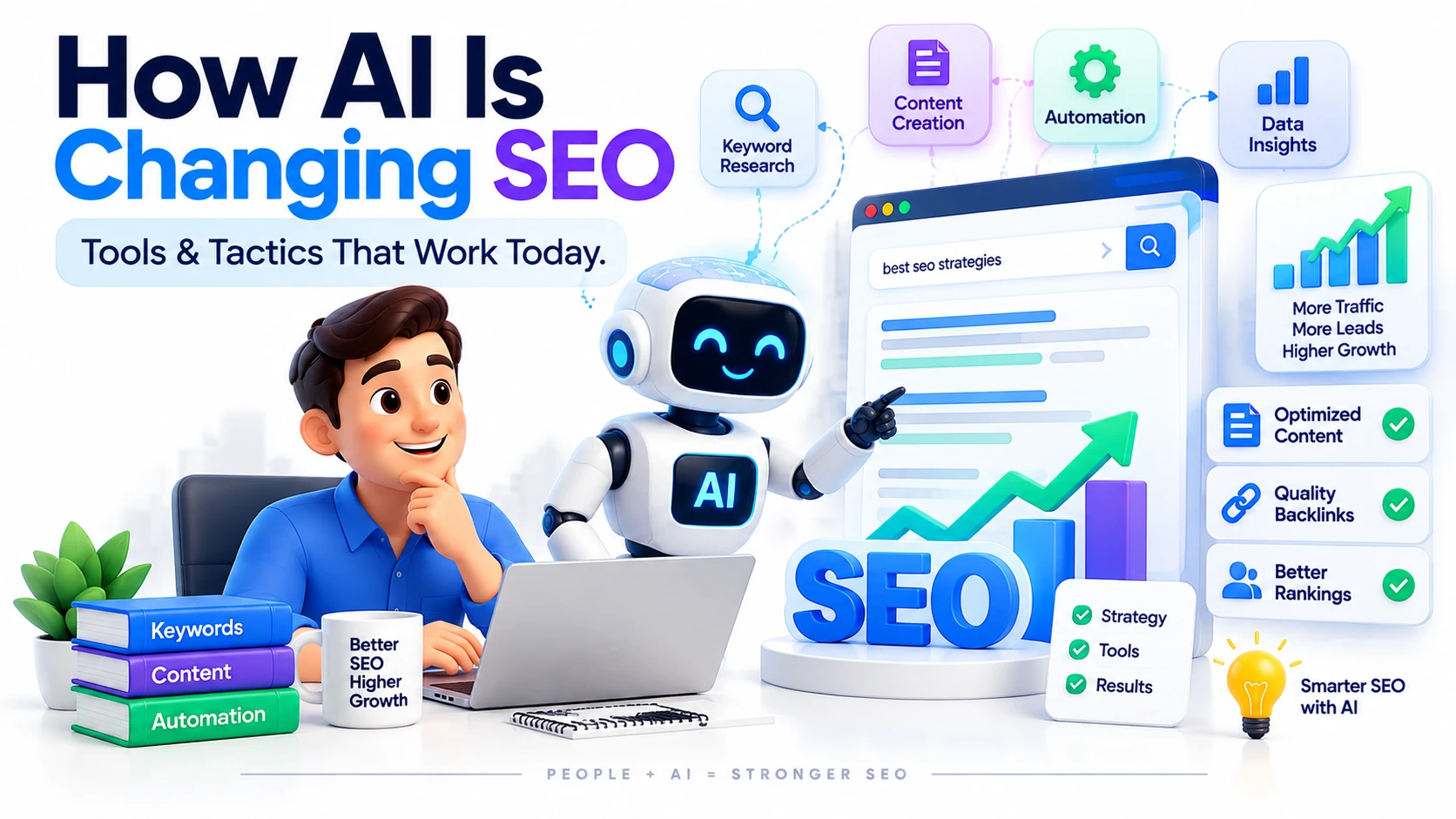
Search engine optimization has changed more in the last few years than it did in the decade before. What once depended on manual keyword research and basic on-page tactics has evolved into a data driven and intent focused discipline. Artificial intelligence now plays a central role in how search engines rank content and how SEO professionals plan strategies.
AI is not replacing SEO. Instead, it is redefining how SEO works. From understanding user intent to optimizing content and improving technical performance, AI is shaping every stage of the SEO process. Businesses that adapt to this change are seeing stronger rankings, better engagement, and more sustainable organic growth.
In this blog, we will explore how AI is changing SEO, the tools professionals are using today, and practical tactics that actually work in real projects.
Why AI Has Become So Important in SEO
Search engines no longer rely on simple keyword matching. They aim to understand what users want and deliver the most helpful result. AI helps search engines analyze massive amounts of data, user behavior, and content quality signals at scale.
Modern algorithms use machine learning to evaluate relevance, context, and satisfaction. This means tactics like keyword stuffing, thin content, and low quality backlinks are far less effective. SEO today is about creating meaningful experiences, and AI helps both search engines and marketers achieve that.
For SEO professionals, AI reduces manual work and improves decision making. Tasks that once took hours can now be completed in minutes with greater accuracy.
How Search Engines Use AI
AI helps search engines understand language more like humans do. Instead of focusing only on exact keywords, they analyze context, synonyms, and intent. This allows search engines to handle conversational and long-tail queries more effectively.
AI also studies how users interact with search results. Click through rates, dwell time, and bounce behavior help search engines learn which pages truly satisfy users. Pages that deliver value consistently are rewarded with better visibility.
Because of this, SEO strategies must focus on usefulness, clarity, and relevance rather than manipulation.
AI Tools That Are Changing SEO Today
AI powered tools are now essential for modern SEO workflows. Below are key categories of tools along with examples professionals actively use.
AI Tools for Keyword Research and Competitive Analysis
Keyword research has evolved beyond search volume. AI tools now analyze intent, trends, and competitive difficulty.
Semrush
Semrush uses AI to identify keyword intent, topic clusters, and content gaps. It helps businesses discover keywords that align with real user needs rather than just traffic numbers.
Ahrefs
Ahrefs applies machine learning to backlink analysis, keyword difficulty scoring, and competitor research. It is widely used to understand why competitors rank and how to outperform them.
Moz Pro
Moz Pro offers AI driven keyword suggestions, site audits, and ranking insights, making it useful for long term SEO planning.
AI Tools for Content Creation and Optimization
Content quality is one of the strongest ranking factors today. AI tools help ensure content is relevant, complete, and aligned with search intent.
Surfer SEO
Surfer SEO analyzes top ranking pages and provides content optimization recommendations based on real SERP data. It helps writers include the right topics and terms without over optimization.
Frase
Frase uses AI to generate content briefs, identify common user questions, and structure articles that match search intent. It is especially effective for informational content.
Jasper AI
Jasper AI assists with drafting blog posts, landing pages, and meta descriptions. When combined with human editing, it speeds up content production while maintaining quality.
AI Tools for Technical SEO
Even strong content struggles if technical issues block crawling or indexing. AI powered tools help detect and prioritize fixes.
Screaming Frog SEO Spider
Screaming Frog crawls websites to identify technical issues like broken links, duplicate content, and missing metadata. AI integrations help analyze large sites more efficiently.
Sitebulb
Sitebulb uses AI to explain technical SEO issues clearly and assigns priority levels based on SEO impact, making it easier to act on insights.
AI Tools for Rank Tracking and Performance Monitoring
Tracking rankings alone is no longer enough. AI tools analyze trends and identify performance patterns.
SE Ranking
SE Ranking tracks keyword performance, monitors competitors, and connects ranking data with traffic insights using AI driven analysis.
Nightwatch
Nightwatch offers advanced rank tracking with segmentation and reporting powered by AI, making it ideal for agencies and large projects.
AI Tools for Semantic Relevance and Content Quality
Search engines reward content that covers topics comprehensively.
Clearscope
Clearscope analyzes top performing content and suggests relevant terms to improve topical authority and relevance.
RankIQ
RankIQ helps bloggers and niche websites find low competition keywords and optimize content for faster rankings.
AI Powered SEO Tactics That Work Today
Tools alone do not drive results. Success comes from applying the right tactics using AI insights.
Focus on Search Intent First
AI tools help categorize keywords by intent such as informational, commercial, or transactional. Creating content that directly matches intent improves rankings and engagement.
For example, informational searches require guides and explanations, not sales pages. Matching content to intent builds trust with both users and search engines.
Build Semantically Rich Content
Instead of repeating one keyword, AI helps identify related topics and phrases that strengthen relevance. Covering these naturally makes content more comprehensive and authoritative.
This approach helps pages rank for multiple related queries and improves overall visibility.
Answer Real User Questions
AI tools reveal common questions users ask around a topic. Including clear answers improves chances of appearing in featured snippets and people also ask sections.
Structured answers also improve readability and user satisfaction.
Use Competitive Gap Analysis
AI powered competitor analysis shows keywords and topics competitors rank for that you do not. Creating better content around those gaps helps capture new traffic.
Prioritize Technical SEO Fixes
AI tools highlight technical issues by impact. Fixing crawlability, indexation, and page speed issues first ensures search engines can properly access and rank content.
Improve User Experience with Data Insights
AI analyzes user behavior signals like engagement and navigation patterns. Improving internal linking, content structure, and page layout based on these insights boosts performance.
Challenges of Using AI in SEO
AI is powerful, but over reliance can be risky. Publishing unedited AI content can lead to generic pages that fail to stand out. Human expertise remains essential.
Accuracy is another concern. AI tools can sometimes produce outdated or incorrect information. Always review and validate outputs.
Ethical SEO also matters. Avoid duplicate content, respect user privacy, and focus on genuine value rather than shortcuts.
The Future of AI in SEO
AI will continue to evolve search experiences. Voice search, visual search, and predictive results will become more common. SEO strategies will increasingly focus on context, personalization, and experience.
Brands that combine AI insights with authentic expertise will lead the future of search.
Final Thoughts
AI has transformed SEO into a smarter, faster, and more strategic discipline. From keyword research to content optimization and technical audits, AI tools help professionals work more efficiently and effectively.
However, the most successful SEO strategies still rely on human creativity, experience, and judgment. AI should support your strategy, not replace it.
By using the right tools, understanding search intent, creating meaningful content, and continuously optimizing user experience, businesses can achieve sustainable SEO growth in an AI driven search landscape.
For businesses looking to grow online, especially startups and small to mid sized companies, AI makes it possible to access affordable search engine optimization solutions without compromising on quality. In India, where competition is rapidly increasing across industries, leveraging AI driven SEO strategies allows brands to improve visibility, attract the right audience, and compete effectively in both local and global markets.