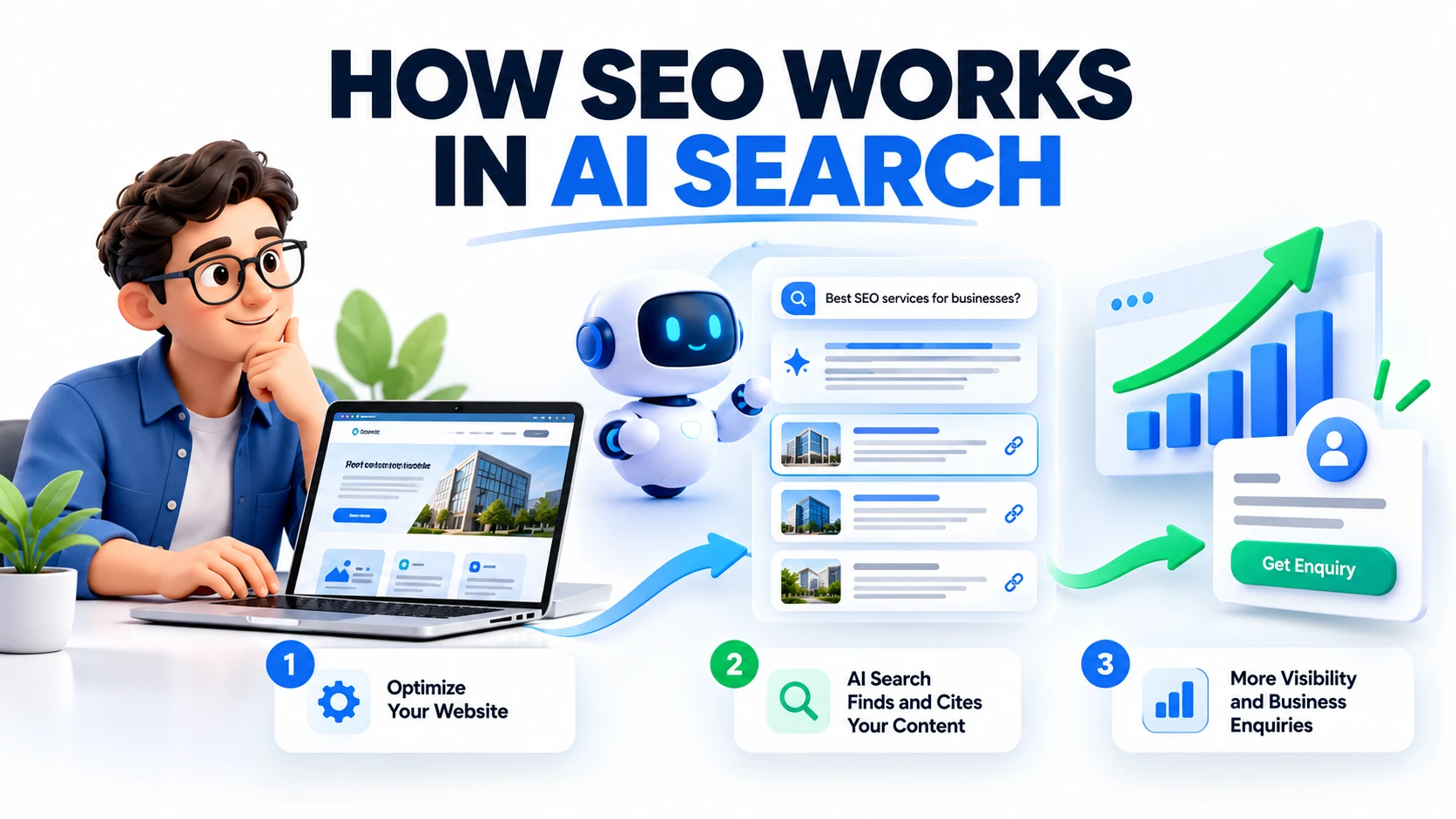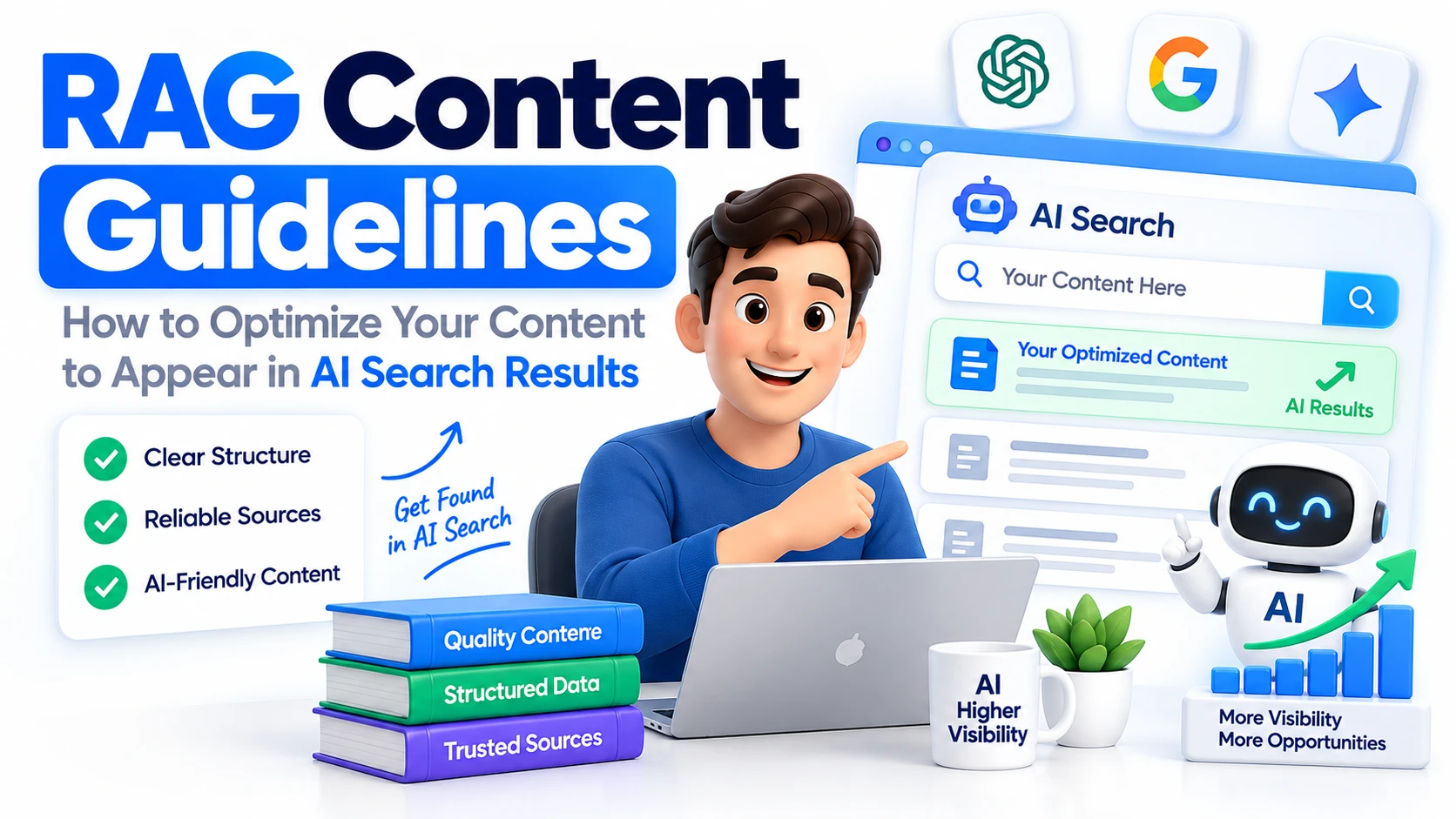
The way people search for information online is changing rapidly. Instead of clicking through multiple websites, users are increasingly getting answers directly from AI-powered tools such as ChatGPT, Google AI Overviews, Gemini, Claude, and Perplexity.
These AI systems don't simply make up answers. In many cases, they retrieve information from websites, analyze it, and then generate a response for the user. This process is known as Retrieval-Augmented Generation (RAG).
For businesses, bloggers, and website owners, this creates a new opportunity. Instead of focusing only on traditional SEO rankings, you can also optimize your content so that AI systems can easily find, understand, and use it when answering questions.
For a digital marketing agency like Webastr, understanding RAG optimization is becoming just as important as traditional SEO. The websites that provide clear, helpful, and well-structured content are more likely to be referenced by AI tools in the future.
In this guide, we'll explain RAG in simple language and show you how to optimize your content for AI search.
What is RAG?
RAG stands for Retrieval-Augmented Generation. It is a technology that allows AI systems to retrieve information from external sources before generating an answer. Think of it this way. If someone asks ChatGPT, "What is Technical SEO?" the AI may look for relevant information from trusted sources, understand the content, and then generate a useful response. Instead of relying only on information learned during training, the AI can use fresh and relevant content from websites.
This means that your content has the potential to become a source for AI-generated answers if it is written and structured properly.
Why RAG Matters for SEO
For years, SEO was mainly about ranking on search engines. If your page appeared on the first page of Google, you had a good chance of attracting visitors. Today, search is evolving. Users often see AI-generated answers before traditional search results. If your content is selected as a source for those answers, your brand can gain visibility even when users don't click through multiple websites.
This doesn't mean traditional SEO is dead. In fact, strong SEO fundamentals are still important. AI systems generally prefer content that is already trusted, relevant, and easy to understand. The difference is that content now needs to be optimized not only for search engines but also for AI retrieval systems.
How AI Systems Retrieve Content
When a user asks a question, AI systems try to find the most relevant information available.
For example, imagine someone searches:
"How can I improve my website's SEO in 2026?"
The AI system will analyze the question, identify the user's intent, search for relevant content, and retrieve information from trusted sources. It then combines that information and creates a response that answers the user's question. If Webastr has published a detailed guide covering SEO strategies, technical SEO, content optimization, and AI SEO trends, the AI system may use that content as part of its answer. This is why creating useful and comprehensive content is so important.
Start with Search Intent
One of the biggest mistakes content creators make is focusing only on keywords.Modern AI systems are designed to understand what users actually want. This is known as search intent.
For example, someone searching for "SEO services" may have different goals.
One user might want to understand what SEO services are. Another user may want to hire an SEO agency. Someone else might be comparing prices. Each of these users has a different intent. Before writing any content, ask yourself what question the reader is trying to answer. The better you understand the user's intent, the more likely your content will satisfy both users and AI systems.
Use Clear and Simple Language
Many websites try to sound professional by using complicated words and technical jargon. The reality is that both users and AI systems prefer clear explanations. If you're explaining Technical SEO, don't start with complex definitions. Instead, explain it in simple terms.
For example:
"Technical SEO is the process of improving a website's structure so that search engines can crawl, understand, and index it more effectively."
This type of explanation is easy to understand and easy for AI systems to retrieve. When writing content for Webastr, always imagine you're explaining the topic to someone who is completely new to digital marketing.
Answer Questions Directly
One reason AI systems retrieve certain content more often is because it provides direct answers. Many blogs spend several paragraphs introducing a topic before answering the main question. This can make it harder for users and AI systems to find the information they need. Instead, answer the question immediately and then provide supporting details.
For example, if your heading is "What is Local SEO?" start with a direct answer. Then explain how it works, why it's important, and how businesses can benefit from it.
This structure makes your content more useful and easier to retrieve.
Organize Content Properly
Content structure plays a major role in RAG optimization. AI systems need to understand how information is organized on a page. Clear headings make this process much easier. A well-structured article should have a logical flow. Each section should focus on a specific topic and build on the previous section.
For example, if Webastr publishes a guide about AI SEO, the article could include sections such as:
What is AI SEO?
Why AI SEO Matters
How AI Search Works
Best Practices for AI SEO
Common Mistakes
Frequently Asked Questions
This structure helps readers navigate the content while also helping AI systems understand the relationships between different sections.
Build Topical Authority
AI systems are more likely to trust websites that consistently publish content about a specific subject.
If Webastr wants to become an authority in SEO and digital marketing, it should create content covering all related areas.
Instead of publishing one article about SEO, create multiple guides covering topics such as Technical SEO, On-Page SEO, Local SEO, Link Building, AI SEO, Content Marketing, and SEO Audits.
When these articles are connected through internal links, they create a strong topical cluster.
This helps search engines and AI systems recognize your expertise.
Use Real Examples
Examples make content easier to understand and more valuable.
Imagine Webastr publishes a guide about page speed optimization.
Instead of simply saying that page speed affects rankings, explain how improving image sizes, reducing unnecessary code, and optimizing server performance can improve loading times.
Practical examples help readers learn and demonstrate real expertise.
AI systems also prefer content that provides useful insights rather than generic information.
Keep Content Updated
AI systems often prefer fresh and relevant information.
SEO, AI search, and digital marketing change quickly. Content that was accurate two years ago may no longer be relevant today.
Regularly review and update your articles.
Add new information, update statistics, improve examples, and include the latest industry trends.
Fresh content signals that your website is actively maintained and trustworthy.
Technical SEO Still Matters
Even the best content won't perform well if search engines cannot access it. A strong technical foundation is essential for RAG optimization. Make sure your website has a clean structure, fast loading speed, mobile-friendly design, and proper indexing setup. Use XML sitemaps, optimize Core Web Vitals, fix crawl errors, and ensure important pages are easily accessible. Technical SEO helps search engines understand your website, which ultimately improves the chances of your content being retrieved by AI systems.
Create Helpful FAQ Sections
Frequently Asked Questions are highly effective for both users and AI systems. FAQ sections allow you to answer common questions directly and clearly.
For example, an AI SEO article could answer questions such as:
What is AI SEO?
How does RAG work?
Can AI tools use website content?
How can businesses optimize for AI search?
FAQs make it easier for AI systems to identify relevant answers and provide them to users.
Common Mistakes to Avoid
Many websites create content that focuses too much on keywords and not enough on user experience.
Keyword stuffing, thin content, poor formatting, outdated information, and generic AI-generated articles can all reduce the chances of being retrieved by AI systems.
Another common mistake is publishing content without a clear purpose.
Every article should answer a specific question or solve a particular problem.
When content is genuinely useful, it becomes much more valuable for both users and AI retrieval systems.
The Future of SEO and AI Search
The future of search is moving toward AI-driven experiences. Users want faster answers, better explanations, and more personalized results. AI systems are designed to deliver exactly that. As a result, websites will need to focus more on quality, expertise, and user satisfaction. The brands that create the most helpful content will be the ones most likely to appear in AI-generated answers. For businesses like Webastr, this represents a significant opportunity to build visibility and authority in an evolving search landscape.
Conclusion
RAG optimization is not about finding shortcuts or trying to trick AI systems. It's about creating content that is genuinely useful, easy to understand, and structured in a way that makes information easy to retrieve.
If you want your content to appear in AI search experiences, focus on answering real questions, understanding user intent, providing clear explanations, and covering topics in depth.
For Webastr, combining strong SEO practices with AI-friendly content strategies can help increase visibility across Google Search, AI Overviews, ChatGPT, Gemini, Claude, Perplexity, and future AI platforms.
As AI continues to transform the way people search for information, the websites that provide the clearest and most valuable answers will have the greatest advantage.