Limited Time Get a free SEO audit + custom growth plan — no cost, no obligation.

Article

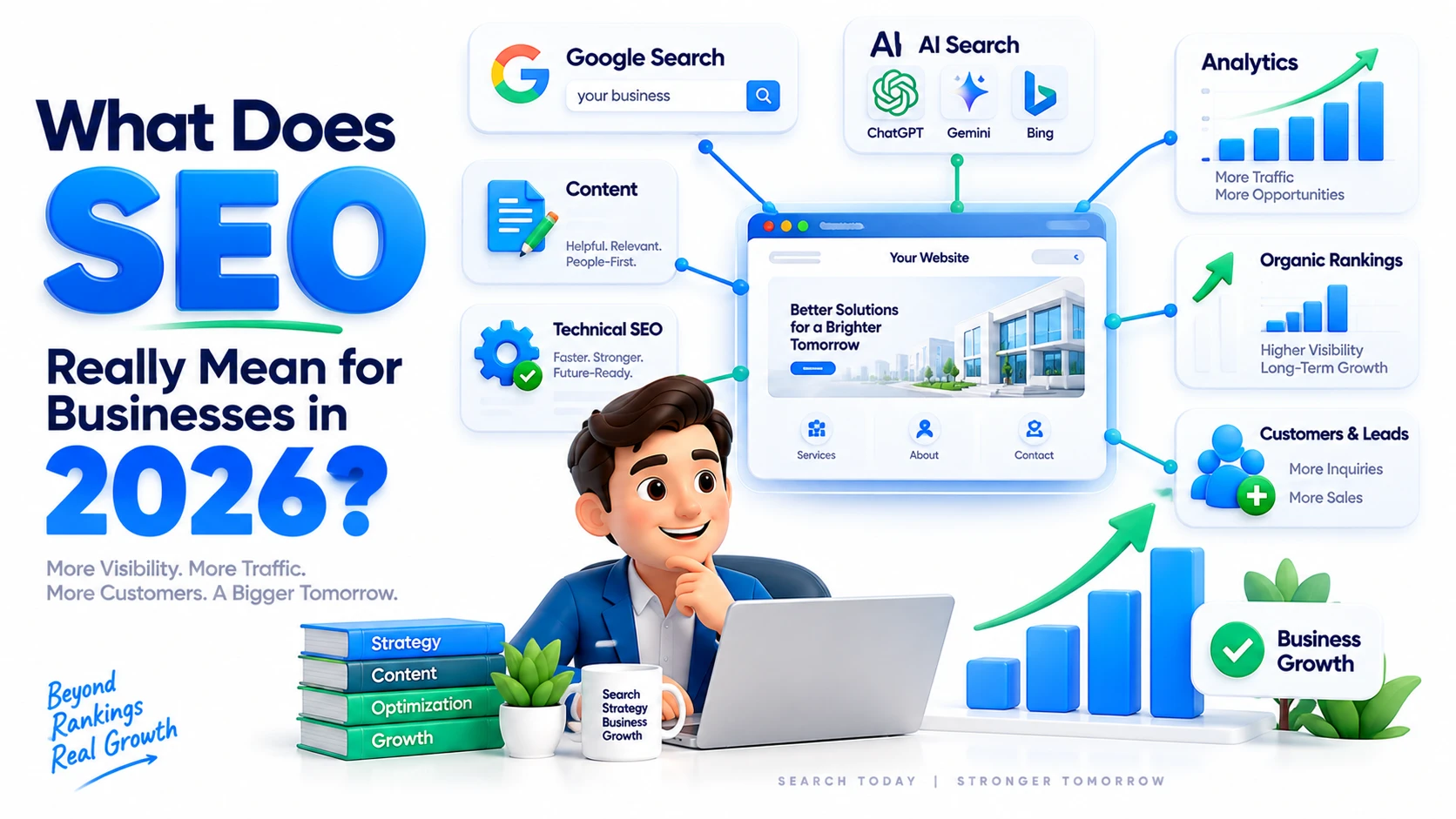
What Does SEO Really Mean for Businesses in 2026?

January 17, 2026 6 min read
What Does SEO Really Mean for Businesses in 2026?

Search engine optimization (SEO) is currently among the most significant online marketing practices that companies should consider to achieve long-term visibility through the internet. As compared to paid advertising, SEO aims at enhancing the structure, content, and authority of a given site to ensure it is ranked by the search engine such as Google. With the evolving nature of search behavior, it is critically important to realize how SEO functions so that the brands that desire to grow sustainably and not temporary effect can be realized.

The new direction of SEO is not only about the keywords. It entails user experience, technical performance, quality of content and trust signals, which assist the search engine to determine which pages should get top ranking. Companies that target SEO do not optimize to algorithms, but optimize to real users.

Why Is SEO Important for Long-Term Online Growth?

SEO is an important element used in ensuring that websites are able to get regular and high intent traffic. Users are usually willing to act when they go on the web to seek solutions, products or information. Placing high in the relevant searches enables the businesses to reach the potential customers at the very point of time when they are in need of answers.

Credibility is also another significant advantage of SEO. Websites that are located in the first pages of the search results are also viewed as more credible and authoritative. In the long run, this trust will be converted into greater involvement, increased conversion rates, and brand awareness.

Compounding results are also provided by SEO. Whereas paid advertisements cease to attract traffic when the budget runs out, optimized pages can remain active to attract visitors months or even years long at low maintenance costs.

Key benefits of SEO include:

  • Increased visibility in search engine results

  • Higher brand credibility and trust

  • Long-term traffic without ongoing ad spend

  • Better alignment with user intent

  • Stronger return on investment over time

How Does SEO Support Online Stores and Digital Products?

SEO works best with online shops and product-oriented companies. There are thousands of competitors in the sale of similar goods, and visibility is the difference between success and obscurity. This is the place where the role of an ecommerce seo specialist comes in as they aim at optimizing the product page, category, inner linking and purchase-oriented search intent.

In the case of online stores, SEO assists in enhancing branded as well as non-branded searches. It is also user-friendly, as it improves the speed of the site, mobile usability, and navigation, which directly affect making purchasing decisions. SEO done in the right way does not only boost traffic; it boosts qualified traffic which has more chances of being converted into sales.

What Are Organic SEO Services and How Do They Work?

Organic search engine optimization emphasizes on achieving traffic through natural means other than purchased. Such services as organic seo generally involve the use of keyword research, on-page optimization, content optimization, link building and performance monitoring. This is aimed at ensuring that a site is tapped to the guidelines of the search engine and should produce valuable content to its consumers.

Such services are more relevant and quality-oriented than shortcuts. Organic seo services does not focus on the fast rankings, but the authority is built a bit at a time through the development of useful content, optimization of a site structure, and the acquisition of natural links. This strategy will minimize the possibility of fines and prolongation of search positions.

Organic businesses are also likely to lead to increased engagement rates since the users reach the business due to their actual interest and not through advertising, which causes distraction.

What Is an SEO Audit and Why Does It Matter?

Search engine An SEO audit is a comprehensive check up of the health of a Web site. It shows potential technical problems, gaps in content, and chances of optimizing performance that might be restricting performance. By using seo audit experts, the diagnosis of these issues and the proper prioritization is done correctly.

An audit commonly reviews:

  • Technical SEO (indexing, crawl errors, site speed)

  • On-page SEO (content quality, headings, metadata)

  • Internal linking and site architecture

  • Backlink profile and authority signals

  • User experience and mobile performance

SEO audits are essential when traffic drops, rankings stagnate, or major website changes occur.

How Long Does SEO Take to Show Results?

Among the most frequently asked questions regarding the topic of SEO are the question of time it takes to realize the result. The solution is a query that lies on a number of variables and some of these factors are competition, history of the site, and quality of optimization activities. More often than not, one would see some improvements in three to six months and more pronounced results would be seen with time.

SEO cannot be applied as an overnight solution, but it is a trustworthy one. The slow aspect of SEO also enables the business to have a solid base which can enable steady growth. The most important are patience and consistency since compromising corners is usually followed by short-term profits or losses in the long term.

Is SEO Still Worth It in a Competitive Digital Market?

Despite growing competition, SEO remains one of the most effective digital marketing channels. As search engines become more user-focused, high-quality websites gain an advantage over those relying on outdated tactics.

SEO continues to evolve with trends such as:

  • Voice and conversational search

  • AI-driven search results

  • User experience as a ranking factor

  • Content depth and topical authority

  • Trust and credibility signals

Businesses that adapt to these changes benefit from stronger visibility and resilience against algorithm updates.

What Should Businesses Focus on First When Starting SEO?

For businesses new to SEO, the first step should always be building a strong foundation.This involves having a technically stable site, site structure and copy that actually responds to questions posed by the users. Without these essentials, complex strategies will not bring any significant output.

It is also important to know the search intent of your audience. SEO is most effective when one is producing content that is aimed at addressing real issues and not merely aiming at the keywords. In the long-term, the strategy will result in improved rankings, increased engagement and sustainable growth.

Final Thoughts: How Can SEO Drive Sustainable Success?

SEO is more than rankings, it is about building trust, authority, and value for users. Businesses that invest in SEO position themselves as reliable sources of information and solutions.

With consistent effort, SEO delivers:

  • Ongoing organic traffic

  • Stronger brand credibility

  • Improved user engagement

  • Lower customer acquisition costs

  • Sustainable digital growth

Whether you are running a content-based website, a service business, or an online store, SEO provides a pathway to reach the right audience without relying solely on paid traffic. With the right strategy and consistent effort, SEO can become one of the most powerful drivers of digital success.
Frequently Asked Questions

SEO is the process of improving a website so it appears higher in search engine results. It focuses on making content useful, improving website performance, and helping search engines understand what each page is about.

SEO helps businesses reach people who are actively searching for information, products, or services. This leads to higher-quality traffic, better engagement, and long-term visibility without relying entirely on paid ads.

SEO and paid advertising serve different purposes. Paid ads deliver immediate visibility, while SEO builds sustainable traffic over time. Many businesses use both, but SEO offers stronger long-term value.

SEO is an ongoing process. Websites should be reviewed and optimized regularly to keep up with search engine updates, content changes, and user behavior trends.

Most websites begin seeing improvements within a few months, but stronger results usually take longer. SEO growth depends on competition, consistency, and content quality.

More From The Blog

Shopify SEO Checklist: 15 Steps to Improve Your Store's Visibility October 17, 2026

Shopify SEO Checklist: 15 Steps to Improve Your Store's Visibility

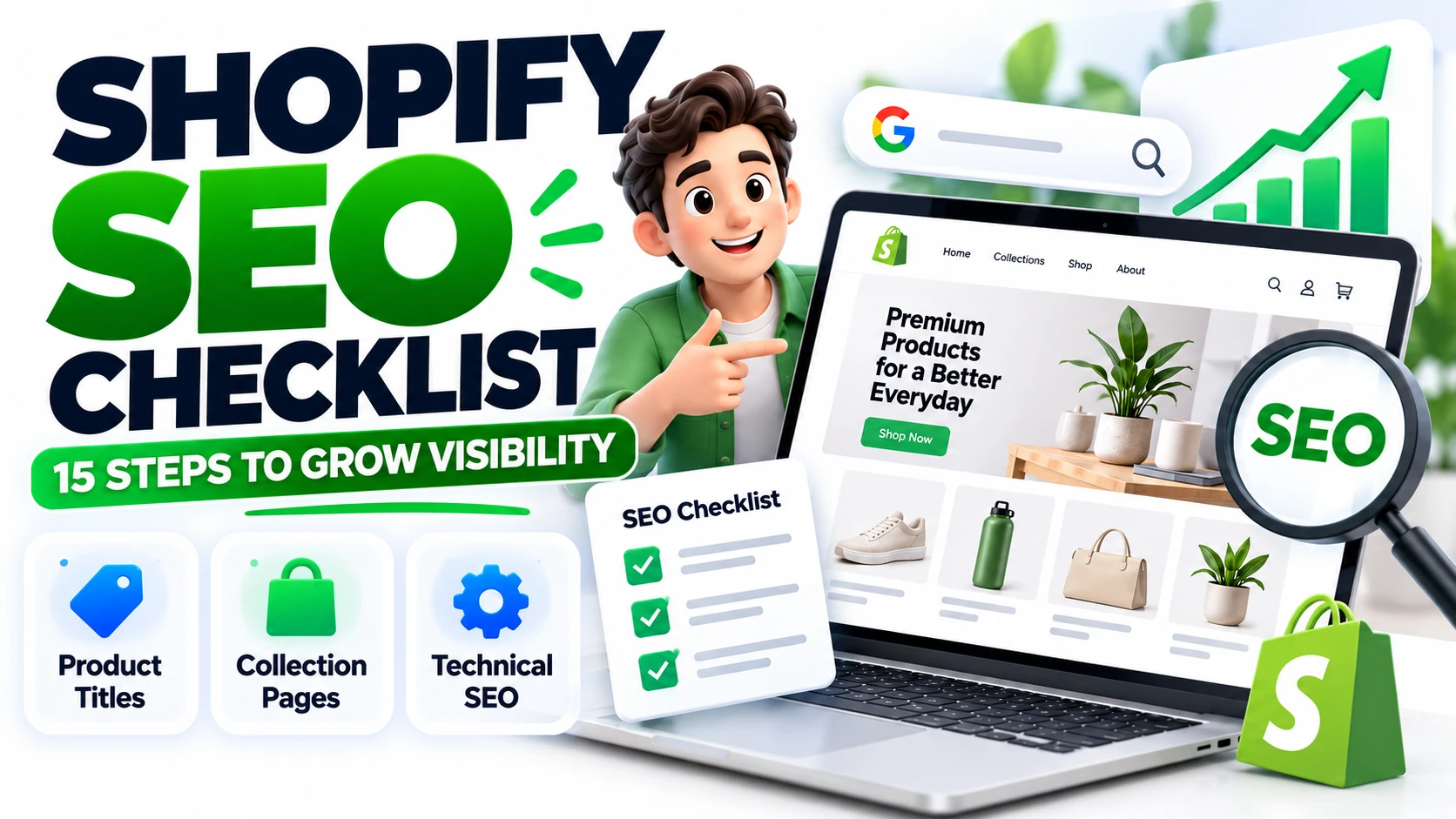
Your Shopify store may have excellent products and attractive designs, but are potential customers finding it on Google?Without a clear SEO strategy, your products can struggle to reach shoppers searching for what you sell. The right improvements can help your store become easier to discover and create more opportunities for sales.This Shopify SEO checklist covers 15 practical steps to improve your store's search visibility, strengthen product pages and attract relevant visitors.1. Optimize Your Shopify HomepageEffective Shopify homepage SEO starts with explaining what your store sells and why customers should consider buying from you.Steps 1 to 3: Homepage Optimization1. Write a descriptive page title. Include your main product category naturally.2. Improve your homepage content. Clearly explain your products, target customers and main benefits.3. Organize navigation and internal links. Make important collections, products and contact information easy to find.Avoid keyword stuffing. Prioritize helpful content and a clear shopping experience.2. Improve Shopify Product Page SEOProduct pages can attract customers searching for specific products, features, sizes and uses.Steps 4 to 7: Product Optimization4. Optimize product titles. Effective Shopify product title SEO means using descriptive names that explain what the product is.For example, replace “Premium Bottle” with “Insulated Stainless Steel Water Bottle, 750ml” when that accurately describes the product.5. Write original product descriptions. Explain features, materials, dimensions, benefits and practical uses.6. Optimize product images. Use descriptive filenames, relevant alt text and appropriately sized images.7. Review metadata and URLs. Write unique page titles and meta descriptions, and keep URLs clear and descriptive.3. Optimize Collection Pages and Website StructureCollections help customers browse products and can target broader search queries.Steps 8 to 10: Collection Optimization8. Improve collection descriptions. Add useful content that explains the products and helps shoppers choose.9. Create logical categories. Organize products into relevant collections without creating unnecessary duplicates.10. Add relevant internal links. Connect related products, collections and helpful blog articles where those links benefit shoppers.For ecommerce businesses competing in Australia, location-specific expertise can also be valuable. Businesses targeting Melbourne can explore Webastr's SEO services in Melbourne to learn about its broader SEO offering.4. Complete Your Shopify Technical SEO ChecklistTechnical problems can make important pages harder to discover or create a poor shopping experience.Steps 11 to 13: Technical SEO11. Check crawling and indexing. Use Google Search Console to investigate whether important product and collection pages are indexed.12. Review duplicate URLs and redirects. Check canonicalization and use appropriate redirects when changing URLs.13. Improve mobile usability and performance. Review loading speed, navigation, images, buttons and forms on mobile devices.Shopify provides built-in SEO features, including automatically generated sitemaps and canonical tags. However, your content, navigation and website settings still need attention.For more complex technical issues, technical SEO services can help identify problems and prioritize improvements.5. Monitor Performance and Keep ImprovingSEO requires ongoing measurement rather than a one-time checklist.Steps 14 and 15: Tracking and Improvement14. Review Google Search Console. Monitor impressions, clicks, queries and indexing issues to identify opportunities.15. Measure organic traffic and sales. Use analytics to understand whether organic visitors view products, add items to their carts and complete purchases.Focus on business outcomes, not rankings alone. Relevant visitors and completed orders are more valuable than traffic that never converts.6. Common Shopify SEO Mistakes to AvoidWatch out for these common problems:Reusing identical product descriptions across multiple products.Stuffing keywords into product titles.Ignoring collection pages.Publishing unnecessary duplicate pages.Uploading oversized images.Changing URLs without appropriate redirects.Measuring traffic without checking conversions.Fixing these issues can make your store easier to navigate and maintain.7. When Should You Hire Shopify SEO Services?Managing SEO yourself may work for a small store when you have enough time and knowledge. However, a growing product catalogue, technical problems or strong competition can make optimization more complicated.Professional Shopify SEO services may include keyword research, technical audits, product and collection optimization, internal linking and performance reporting.When evaluating an SEO expert for Shopify, review their ecommerce experience, reporting process and proposed strategy. A Shopify SEO freelancer may suit a smaller project, while a team may be more appropriate for ongoing work across multiple areas.Businesses targeting Brisbane can explore Webastr's SEO services in Brisbane to review its broader SEO offering and consider whether it fits their requirements.Choose a provider who understands your goals, explains their deliverables clearly and avoids guaranteeing rankings or sales.8. Get More Value From Your Shopify StoreYour Shopify store needs more than attractive product pages to compete in organic search. It needs clear structure, useful content, accessible pages and regular performance reviews.Start with this 15-step Shopify SEO checklist, prioritize issues affecting your most important pages and measure whether your improvements contribute to business growth.Need help identifying SEO opportunities in your store?Webastr helps businesses improve website visibility through SEO strategy and technical optimization. Visit the Webastr contact page to discuss your store's requirements and potential next steps.

How Does SEO Work in AI Search? October 10, 2026

How Does SEO Work in AI Search?

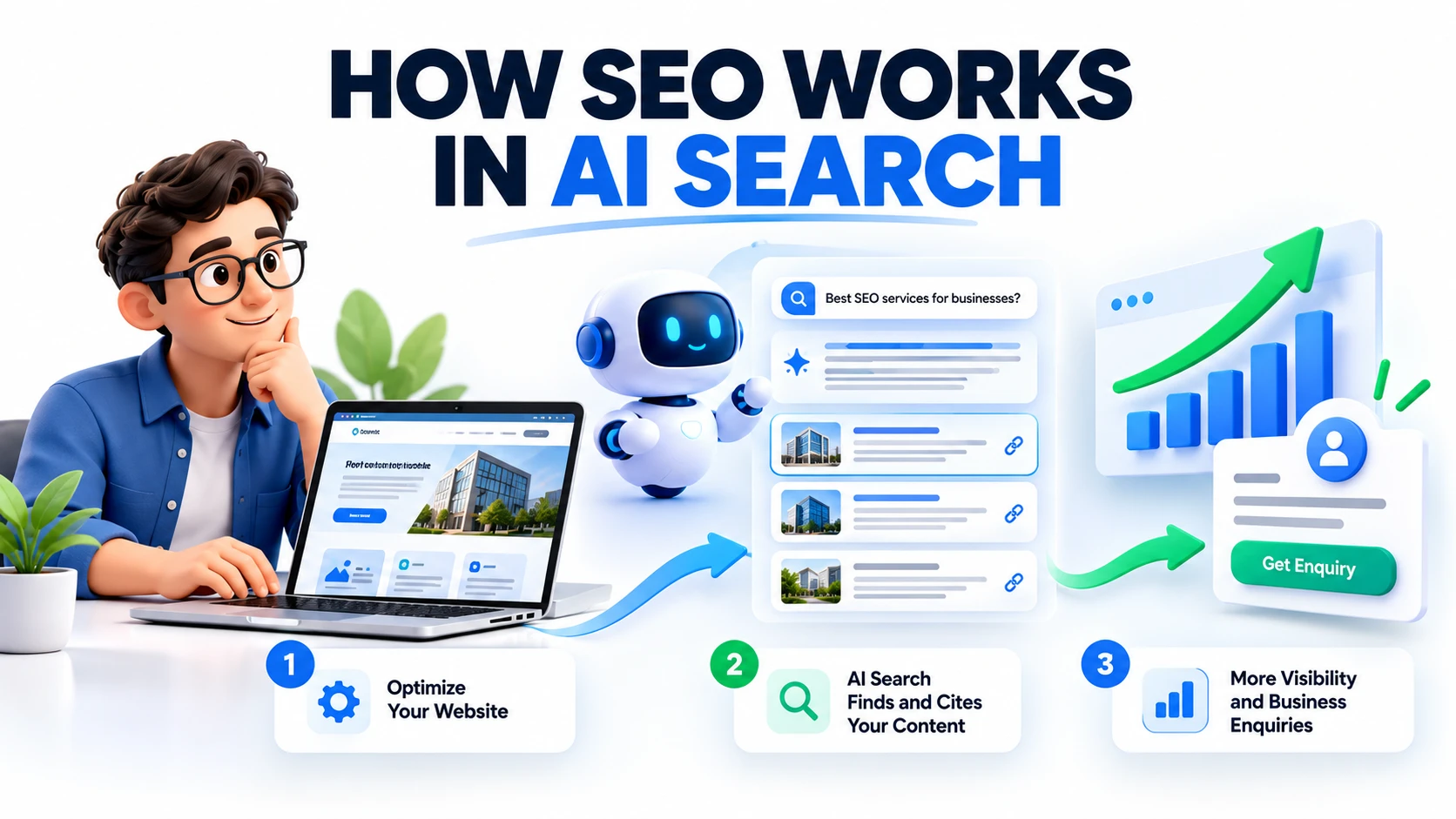
AI-powered search is changing how people discover businesses, compare services and research products. Instead of visiting several websites, users can ask questions and receive AI-generated answers with links to relevant sources.For businesses, this creates another opportunity to reach potential customers. Understanding how SEO works in AI search helps companies build visibility across traditional search engines and AI-powered platforms.1. What Is AI SEO and How Do Agencies Provide It?Businesses searching for what is ai seo or aio services for agencies generally want to understand how AI optimization can improve their online visibility.AI SEO focuses on improving website discoverability across AI-powered search experiences. Related approaches include Answer Engine Optimization (AEO), which aims to provide useful answers, and Generative Engine Optimization (GEO), which focuses on visibility in generative AI experiences.AI SEO services may include website audits, content optimization, technical improvements, competitor research and AI visibility tracking. The objective is to help potential customers discover a business and generate relevant enquiries.2. What Is AI SEO vs the Traditional Approach?The question what is ai seo vs traditional approach highlights an important distinction.Traditional SEO focuses on organic search visibility, while AI search optimization also considers how information appears in AI-generated answers.Traditional SEOAI search optimizationOrganic rankings and clicksAI mentions and citationsKeyword and search-intent researchKeywords and conversational promptsTechnical SEO and useful contentThe same fundamentals plus AI visibility monitoringOrganic traffic and conversionsAI referrals and qualified enquiriesThese approaches complement each other. Google confirms that established SEO practices remain relevant to its AI search features.3. How Does SEO Work in AI Search Engines?AI search platforms differ, but the process may involve several stages.First, search systems discover website pages through links, sitemaps and other methods. They then process and index eligible content. Depending on the platform and query, relevant information may be retrieved to help generate an answer.The answer may include citations or links that direct users to supporting websites. However, indexing does not guarantee a citation or recommendation.Businesses should focus on making important pages accessible, creating helpful content and clearly explaining their expertise, products and services.4. What Is Prompt Volume in AI Visibility or SEO?A common research question, what is prompt volume in ai visibility or seo, refers to the number or frequency of prompts monitored by an AI visibility tool. Definitions can vary between providers.For example, an agency might track prompts such as:Which SEO company helps small businesses?How can a website appear in ChatGPT search?Which company offers AI SEO services?Prompt volume is not equivalent to traditional keyword search volume. The number of prompts a tool tracks does not automatically represent real-world search demand.Prompt monitoring can help businesses compare brand mentions, citations and competitor visibility across supported platforms.5. Technical SEO for AI SearchTechnical SEO supports website accessibility and discoverability. Important checks include:Making important pages crawlable and indexable.Fixing broken links and navigation issues.Improving website structure and internal linking.Keeping essential content available in readable text.Using accurate structured data where appropriate.Maintaining a good mobile experience.Google does not require special AI-specific markup for inclusion in AI Overviews or AI Mode. Strong SEO fundamentals remain important, although they cannot guarantee citations.For technical website problems, explore Webastr's technical SEO services.6. AI SEO Tracking Tools for ChatGPT, Gemini and PerplexityBusinesses researching ai seo tracking tools for chatgpt search gemini should compare platforms based on their monitoring capabilities and supported AI experiences, including Perplexity.Useful features include prompt tracking, brand mention monitoring, citation analysis, competitor comparisons, historical reporting and source URL identification.When evaluating the best ai-powered platforms for search visibility tracking seo, consider pricing, reporting limitations, data coverage and whether the information helps you make practical decisions.Google Search Console also provides a dedicated report for visibility in Google's generative AI search features, including AI Overviews and AI Mode, following its worldwide rollout in August 2026.7. Can ChatGPT Help With Website Optimization and SEO?Businesses researching chatgpt plans for website optimization seo ai search should understand that AI tools can assist with keyword research, content briefs, technical troubleshooting and reporting, but they do not automatically improve rankings.ChatGPT is most useful when the person using it understands SEO fundamentals and advanced techniques, can verify recommendations, interprets website data correctly and stays updated with changing SEO practices.Use AI to support expert decision-making rather than replace research, testing or professional judgment.8. Best SEO Packages for AI Search Optimization in 2026When comparing the best seo packages for ai search optimization, look for services that match your website's needs and business objectives.A useful package may include:Technical SEO auditing.Content and on-page optimization.Competitor research.AI visibility monitoring.Regular performance reporting.Avoid providers promising guaranteed AI citations or recommendations because these outcomes cannot be reliably controlled.9. How to Adjust Your SEO Budget for AI Search OptimizationBusinesses researching how to adjust seo budget for ai search optimization should protect investment in proven SEO fundamentals before purchasing multiple AI tools.Start by resolving technical problems and improving important pages. Then test suitable visibility tools, measure qualified traffic and enquiries, and increase spending when the results justify further investment.The goal is not to buy every new platform. It is to prioritize improvements that support business growth.10. SEO for AI Search Engines: AEO Tips for 2025 and 2026When researching seo for ai search engines aeo tips 2025 2026, focus on durable practices rather than shortcuts.Create original, helpful content, answer customer questions clearly, maintain accessible pages, strengthen relevant internal links and keep business information accurate.These practices support traditional search as well as AI discovery. No content format or optimization trick guarantees that an AI platform will mention your business.11. When Should You Hire an AI SEO Agency?Professional support may be useful when technical problems persist, AI search visibility is limited or your team lacks the time to manage optimization.Businesses evaluating tools and professional services should consider their website's complexity, reporting needs and available expertise before deciding what to outsource.Webastr's AI SEO services can help businesses identify optimization opportunities and develop a structured search visibility strategy.Final ThoughtsAI search optimization builds on traditional SEO rather than replacing it. Focus on accessible pages, helpful content, credible information and meaningful performance measurement.

Small Business SEO on a Budget: What to Fix First for Better Visibility September 14, 2026

Small Business SEO on a Budget: What to Fix First for Better Visibility

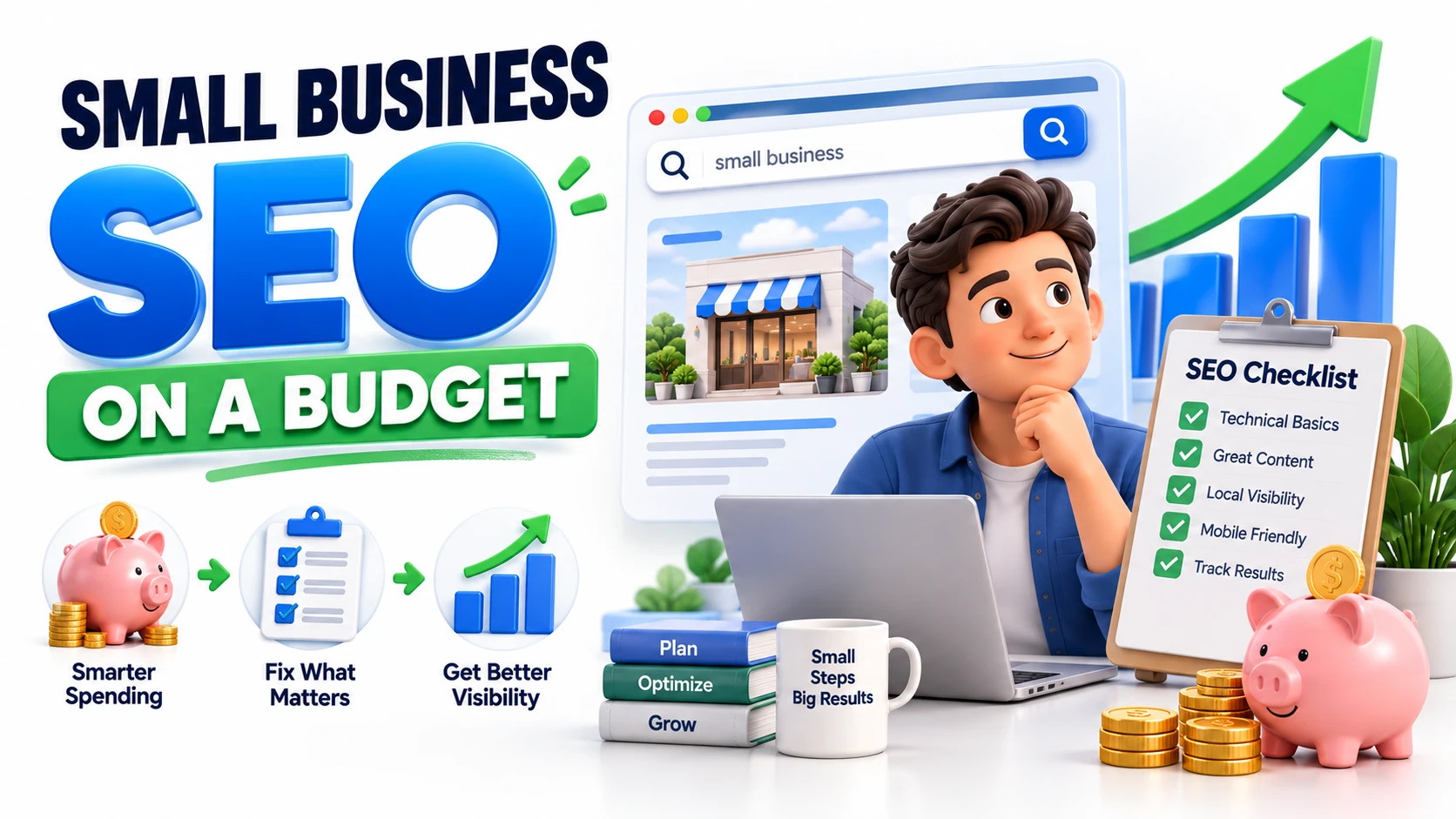
You don't need a huge marketing budget to improve your website's visibility on Google.What you need is the right order of priorities.Many small businesses spend money on expensive SEO tools, create lots of content, or target highly competitive keywords before fixing the basics. That can quickly consume a limited budget without producing meaningful results.A smarter approach is to identify the biggest opportunities, fix the fundamentals, measure what changes, and then decide where to invest next.1. Why Small Businesses Struggle With SEOSEO can feel complicated when you're running a business and handling everything from customers to sales.The problem isn't always a lack of effort. Often, businesses simply don't know which SEO tasks deserve attention first.Common challenges include:Limited marketing budgetsStrong local competitionLack of SEO knowledgeToo many tools and recommendationsTargeting keywords that are too competitiveCreating content without a clear strategyFocusing on traffic instead of business resultsYou don't have to solve everything at once.Start with the improvements that can make the biggest difference.2. What You Can Improve Before Spending MoneyBefore buying an SEO platform or hiring outside help, look at what you can improve on your existing website.Start with:Clear page titles and headingsUseful and relevant contentEasy website navigationStrong internal linkingMobile-friendly pagesUpdated service or product informationAccurate local business informationAlso check whether your important pages can be discovered and indexed by search engines.These basic improvements can uncover problems that don't require a large budget to fix.3. The 7 SEO Issues to Check First1. IndexingMake sure important pages can be discovered and indexed by search engines.Google Search Console can help you identify indexing issues and understand which pages are appearing in search.2. Page Titles and DescriptionsYour page title should clearly explain what the page is about.Avoid filling titles with multiple variations of the same keyword. Write for the person who will see the result in search.3. Search IntentThink about what customers actually want when they search.Someone searching for “SEO services for small business” has a different goal from someone searching “how does SEO work?”Your page should satisfy the purpose behind the search.4. Website StructureImportant pages shouldn't be buried several clicks deep.Make it easy for visitors to move between your homepage, services, products, useful content and contact page.5. Internal LinksInternal links connect related pages and help visitors discover useful information.For example, a helpful article can naturally guide a reader toward a relevant service page.If you're dealing with broader ranking problems, see our guide on Why Your Website Isn’t Ranking on Google for a deeper look at common SEO issues.6. Local VisibilityIf you serve customers in a specific area, review your local presence.Make sure your business information, services, location details, opening hours and other important information are accurate.7. Mobile ExperienceYour website should be easy to use on smaller screens.Check menus, buttons, forms, images, text size and page loading on mobile devices.4. Where Small Businesses Waste Their SEO BudgetA small SEO budget can disappear quickly when it's spent without a clear strategy.Common mistakes include:Buying tools you rarely usePublishing large amounts of low-quality contentChasing highly competitive keywords too earlyPaying for poor-quality backlinksFocusing only on website trafficPaying for services without clear goals or measurementBefore spending money, ask:What problem am I trying to solve?If you don't know the answer, spending more probably won't solve the underlying issue.5. Free SEO Tools Worth UsingYou can learn a lot about your website without immediately paying for an expensive SEO platform.Google Search ConsoleUse it to understand search queries, impressions, clicks and the pages receiving visibility in Google Search.Google AnalyticsUse analytics data to understand how visitors interact with your website and whether your traffic is contributing to meaningful actions.Google Business ProfileFor local businesses, keep your profile accurate and up to date with the correct business information, services, hours and other relevant details.6. When Paid SEO Tools Actually Make SensePaid SEO tools can become useful as your SEO work grows.They may help with:Keyword researchCompetitor analysisRank trackingBacklink researchTechnical auditsContent planningLocal search trackingBut don't buy a tool simply because other businesses use it.Choose it because it solves a specific problem you actually have.For a small website, a few reliable free tools may be enough to identify your next priorities.7. What to Fix First: A Simple Priority ChecklistWhen your budget is limited, follow this order:1. Check indexing and accessibilityMake sure important pages can be discovered.2. Improve important pagesStart with services, products and location pages that can generate business.3. Review search intentMake sure your pages answer what potential customers are actually looking for.4. Improve website structure and internal linksHelp users and search engines discover important pages.5. Strengthen local visibilityPrioritize this if your business depends on local customers.6. Improve mobile experienceMake your website easy to use on phones.7. Invest where the data shows an opportunityOnly increase your SEO spending when you know what needs improvement.8. DIY SEO vs Professional SEO HelpBasic SEO can be handled internally when you have the time and knowledge.Professional help becomes more useful when SEO problems are difficult to diagnose, your website is growing, competitors are gaining visibility, or you don't have enough time to manage SEO consistently.The decision shouldn't simply be based on company size.Consider complexity, available time, competition and potential business value.OptionTypical costBest forWatch out forDo it yourselfYour timeLearning the basicsSlow progressFreelancer$800 to $2,500 per monthDefined one off tasksUneven qualitySEO agency$1,500 to $5,000 per monthOngoing growthNeeds careful vetting9. How to Know When Your SEO Needs Professional AttentionProfessional SEO support may make sense when:You can't determine why visibility isn't improving.Technical issues keep appearing.Multiple pages compete for similar searches.You need a structured SEO strategy.Your competitors consistently outperform you.You don't have time to maintain SEO.Organic search is becoming an important source of leads.At this stage, professional SEO services can help turn individual fixes into a structured growth strategy.10. Final SEO Budget ChecklistBefore spending your next SEO budget, ask:✓ Can Google access my important pages?✓ Are my most valuable pages properly optimized?✓ Am I targeting searches relevant to my customers?✓ Is my website easy to navigate?✓ Have I built useful internal links?✓ Is my local information accurate?✓ Does my website work well on mobile?✓ Am I using available search data?✓ Do I really need another paid SEO tool?✓ Would professional SEO help save time or uncover opportunities?Final ThoughtsSmall business SEO doesn't require a massive budget.The key is prioritization.Fix the fundamentals first, improve the pages that matter most, use free data to discover opportunities, and invest more only when you know where that investment can help.A limited SEO budget can still create meaningful growth when every task has a clear purpose.

Chat with us

Get a Free Audit

We'll review your site and send a custom growth plan - no cost, no obligation.

We'll get back to you within 24 hours. No spam, ever.

Free Consultation

Let's Grow Your Business Together

Get a free, personalized SEO strategy session with our experts — no obligation, no pressure.

  • Free 30-minute strategy call
  • Custom growth roadmap for your site
  • No long-term contracts

Request a Callback

Fill this in and we'll reach out within 24 hours.